Six days across northwest Yunnan that pair the snow-mountain core of Lijiang with the Tibetan plateau country around Shangri-La.
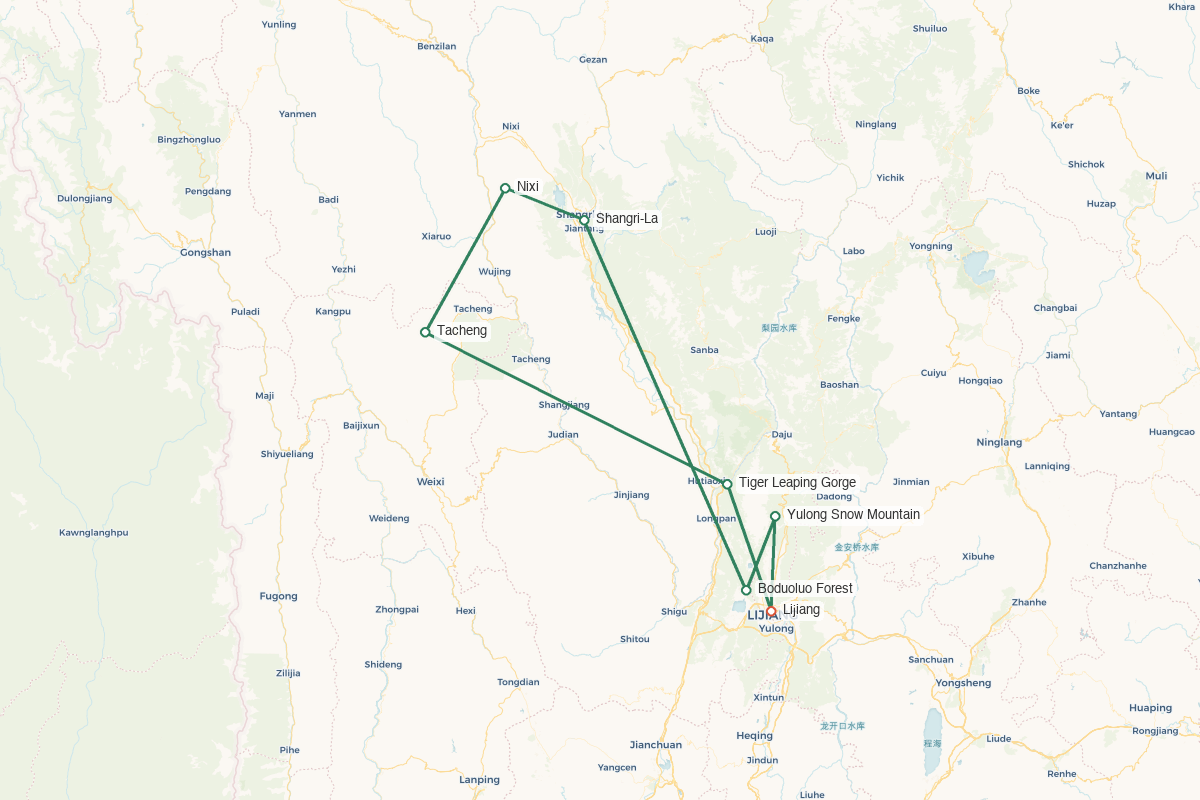
The route opens in Lijiang Old Town — a UNESCO Naxi city of stone-flag lanes, courtyard inns, and the canal-fed quarters that have been standing for eight centuries. Day two climbs Jade Dragon Snow Mountain, rides the quiet Spruce Meadow cable car for a high-altitude meadow walk under the snow ridge, drops to the turquoise pools of Blue Moon Valley, and watches Zhang Yimou’s outdoor Impression Lijiang at 3,100 metres — five hundred local performers, the snow peak in the backdrop. The afternoon visits the Tea Horse Road Museum at Shuhe to read the lineage of the muleteer caravans that connected Yunnan to Tibet for a thousand years. Day three walks the Boduoluo old-growth Yi-village forest, then crosses into Shangri-La. Day four heads to Tangdui village in Nixi for a hands-on session with national-intangible-heritage Tibetan black-pottery masters and the famous black-pottery chicken pot lunch, then drops to Tacheng for a tasting of Tibetan-plateau ice wine and a visit to the Yunnan Red Winery. Day five walks Tacheng’s Yunnan Snub-Nosed Monkey National Park to see one of the world’s rarest primates at close range, then finishes with the Shangri-La section of Tiger Leaping Gorge — the deepest river canyon in the world — before the drive back to Lijiang. Day six is the airport transfer.
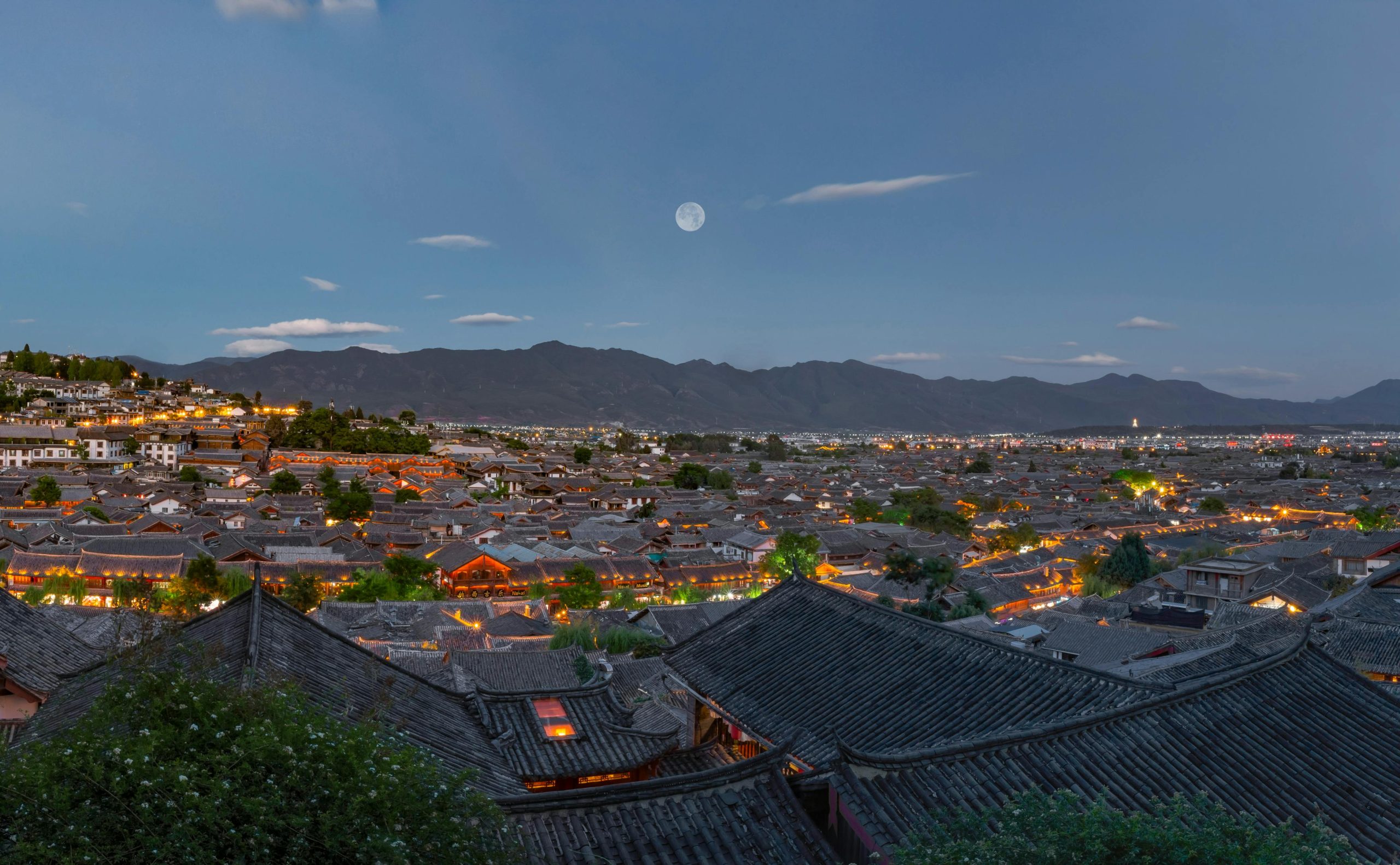
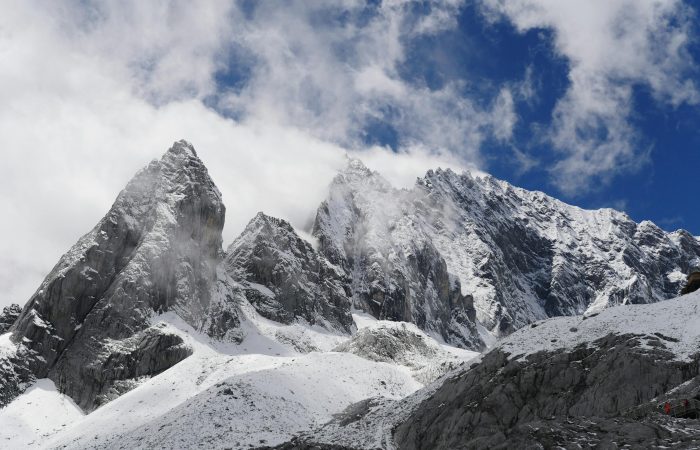
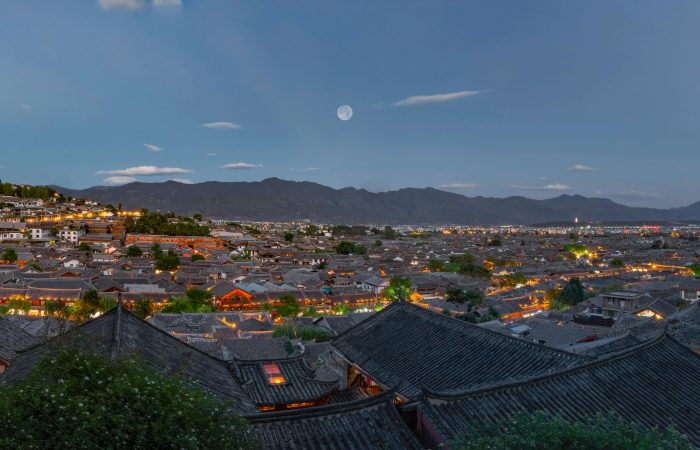
Your guide meets you at Lijiang Sanyi International Airport on arrival — a private vehicle takes you into the city for hotel check-in inside Lijiang Old Town (*Lijiang Gucheng*). Lijiang sits at 2,400 metres on a high plateau under the snow ridge of Yulong Xueshan (Jade Dragon Snow Mountain).
Over tea at the hotel, your guide walks through the journey ahead — the snow-mountain day tomorrow, the Tibetan plateau routing across Shangri-La and Tacheng, and the textures the trip is built around: Naxi old-town life, Yulong Xueshan, the Tea Horse Road, Tibetan craft, and the wild canyons of the upper Yangtze.
The rest of the afternoon is yours to wander Lijiang Old Town at your own pace — the eight-century Naxi quarter has been UNESCO-listed since 1997 for its stone-flag lanes, willow-shaded canals, and the Square Street (Sifang Jie) where five lanes converge. The town breathes differently after dusk: lanterns under the eaves, water sounds from the open canals, and the Naxi music halls warming up for evening performances. Your guide can suggest a quiet lane and a courtyard restaurant for the first dinner — Naxi cuisine leans on river fish, hill-grown herbs, and wild mushrooms in season. The day closes early to help you adjust to the altitude.
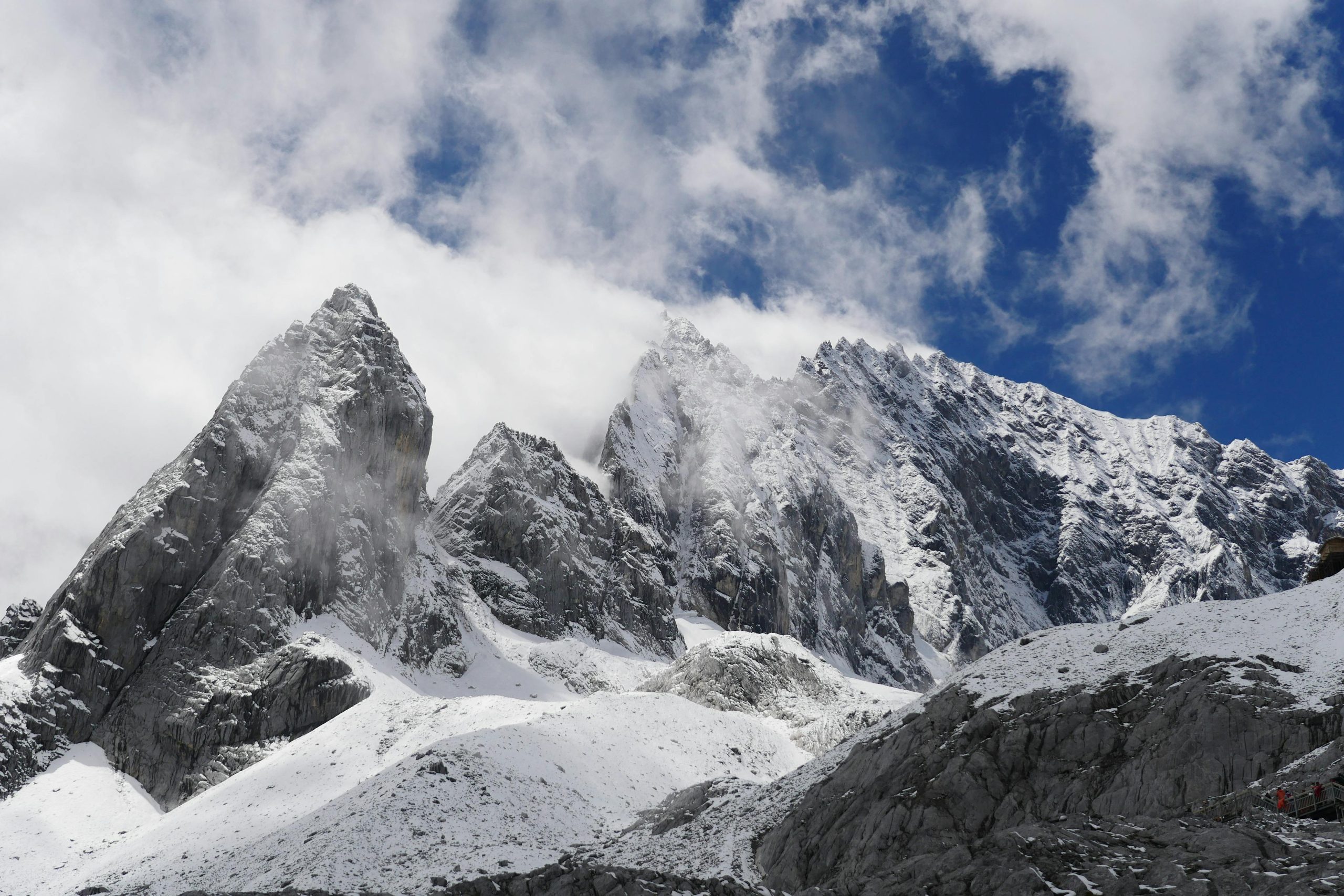
After breakfast, the morning’s drive heads north out of Lijiang to Jade Dragon Snow Mountain (*Yulong Xueshan*) — the southernmost glaciated peak in the northern hemisphere, a thirteen-summit ridge sacred to the Naxi as the home of the protector spirit Sanduo.
A private shuttle climbs the mountain road to Yunshanping (*Yunshan Ping*), the lower cable-car base, and the Spruce Meadow cable car lifts you to 3,200 metres in about twenty minutes. Spruce Meadow itself is a high-altitude alpine plateau ringed by old-growth Yunnan spruce forest, with the snow ridge filling the western sky on a clear day. The boardwalk loop is gentle and flat — well suited to the day’s altitude budget. Your guide explains the cable car choice: the more popular Glacier Park line at 4,500 m is steeper, more crowded, and harder on first-day acclimatisation, so the Spruce Meadow route is the better fit for this trip’s pace.
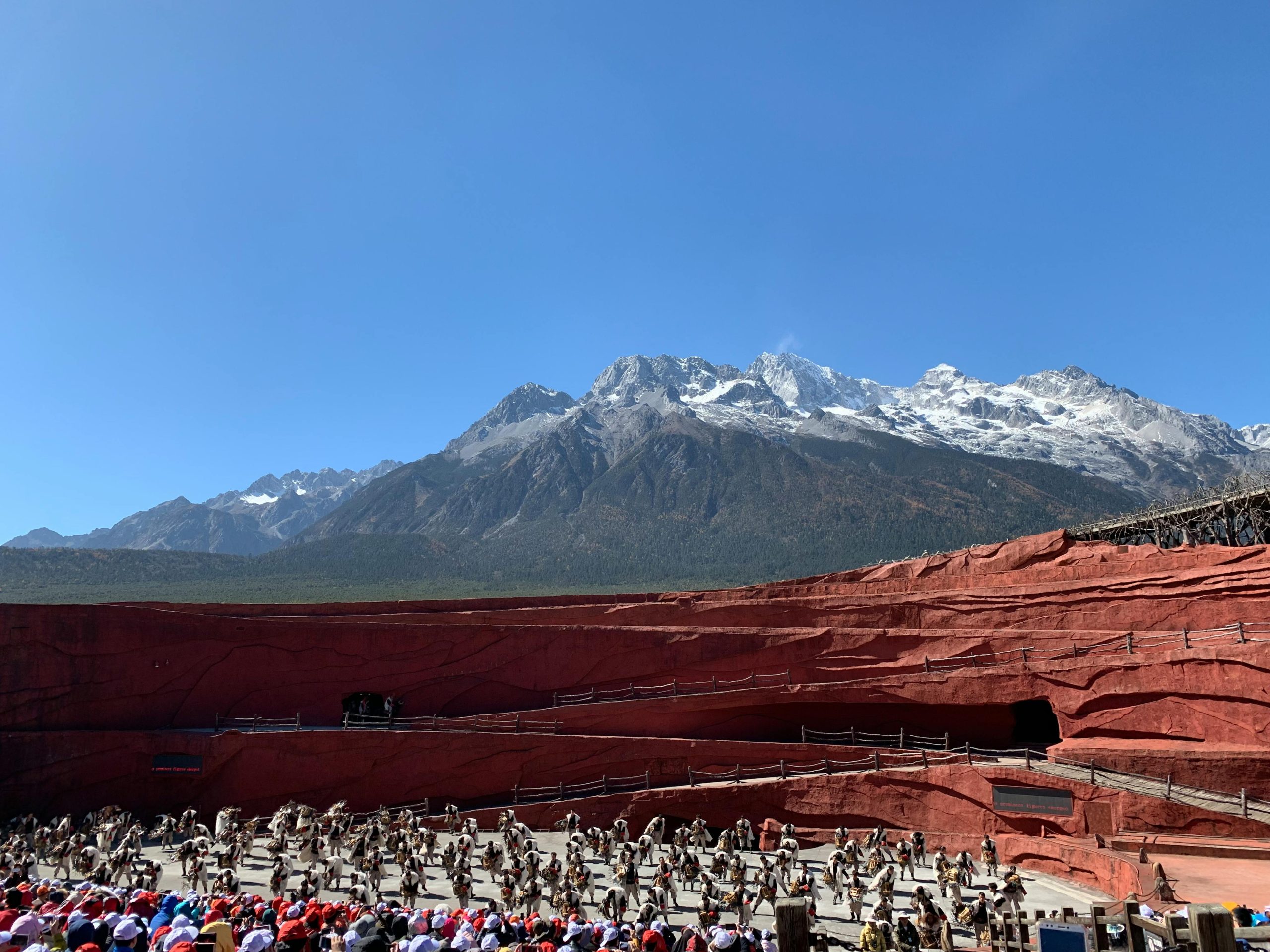
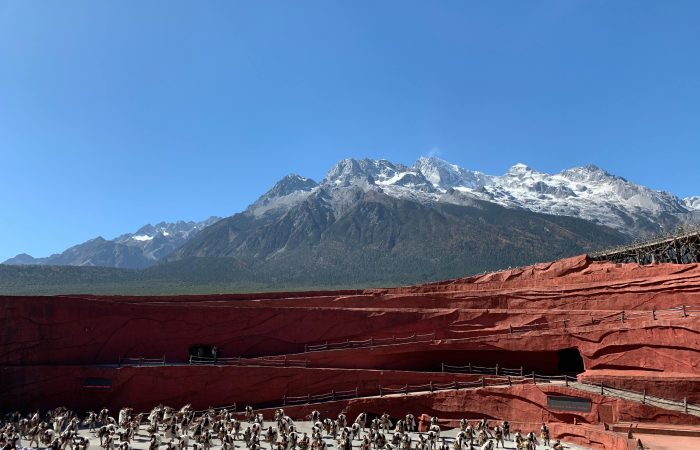
A midday Impression Lijiang (*Yinxiang Lijiang*) outdoor show — Zhang Yimou’s daytime spectacle staged at 3,100 metres at the foot of Yulong Xueshan — runs the next part of the day. Five hundred local performers from ten ethnic groups, a hundred horses, and a 360-degree open-air theatre with the snow peak as the backdrop, all built around the songs and rituals of the Tea Horse Road era. Lunch follows the show — a wild-mushroom hot pot (*yesheng jun huoguo*) of the season, the Yunnan dish travelers come for.
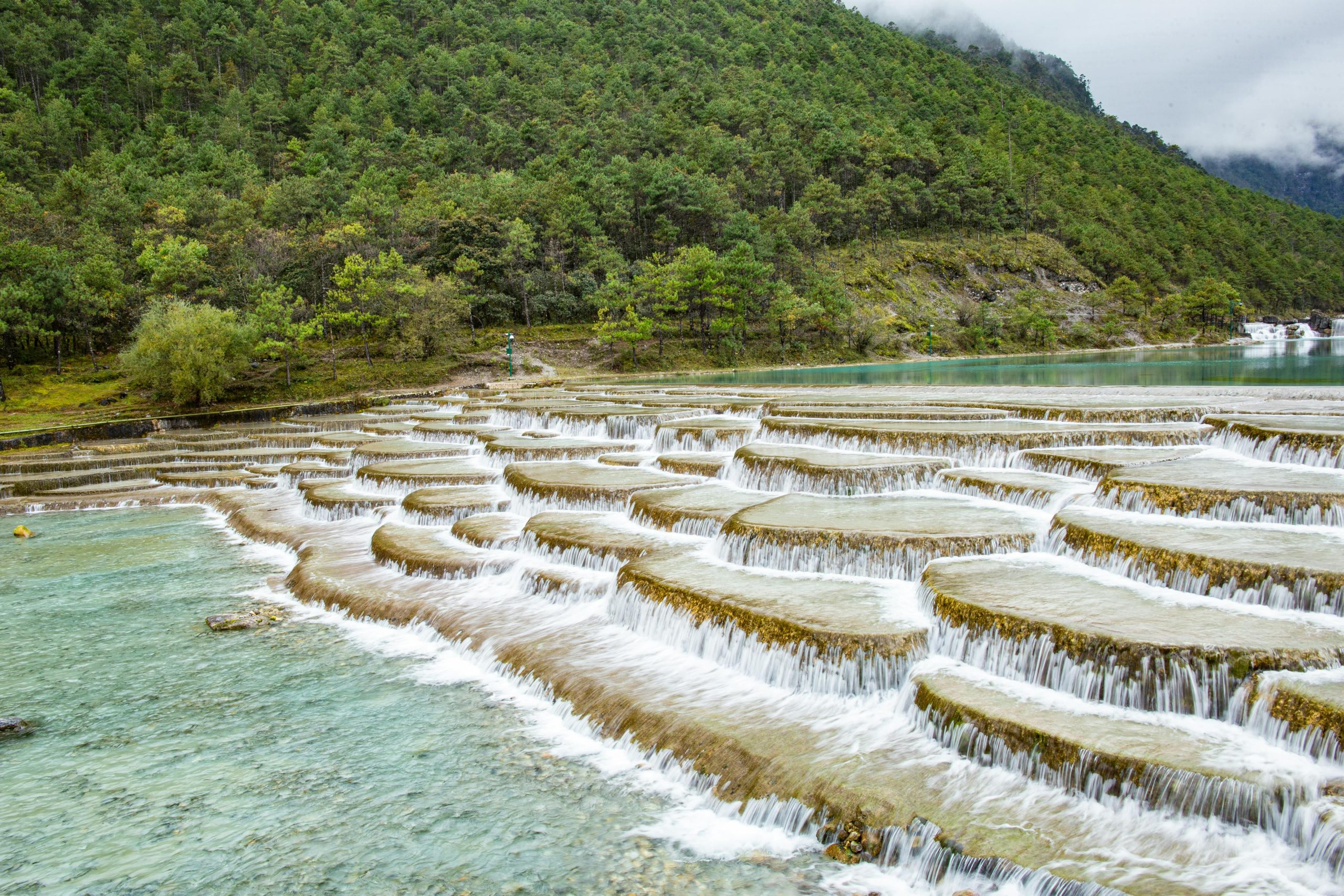
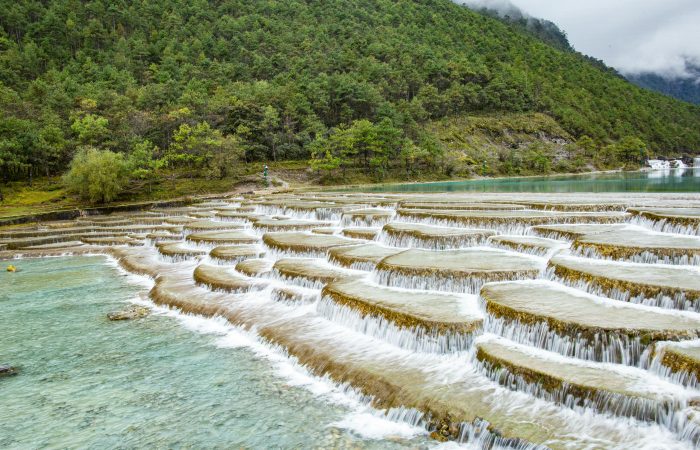
The afternoon drops back down to Lijiang to Blue Moon Valley (*Lan Yue Gu*), a tiered chain of pools fed by the snow-mountain glaciers — turquoise from the calcium-carbonate suspension in the meltwater, layered between the spruce forests of the lower mountain.
Late afternoon, the route turns to Shuhe Old Town (*Shuhe Guzhen*), the smaller and quieter of Lijiang’s two old towns, and the Tea Horse Road Museum (*Cha Ma Gu Dao Bowuguan*) housed inside the Ming-dynasty Mu family Dajue Palace there. The museum’s eight halls trace the muleteer caravans that connected Yunnan to Tibet for over a thousand years — Pu’er tea moving north into the highlands, salt and horses moving south. Your guide reads the route maps and the surviving Ming-dynasty murals (the last surviving Ming murals in Yunnan outside the Baisha frescoes). The car returns you to the Lijiang hotel for the evening.
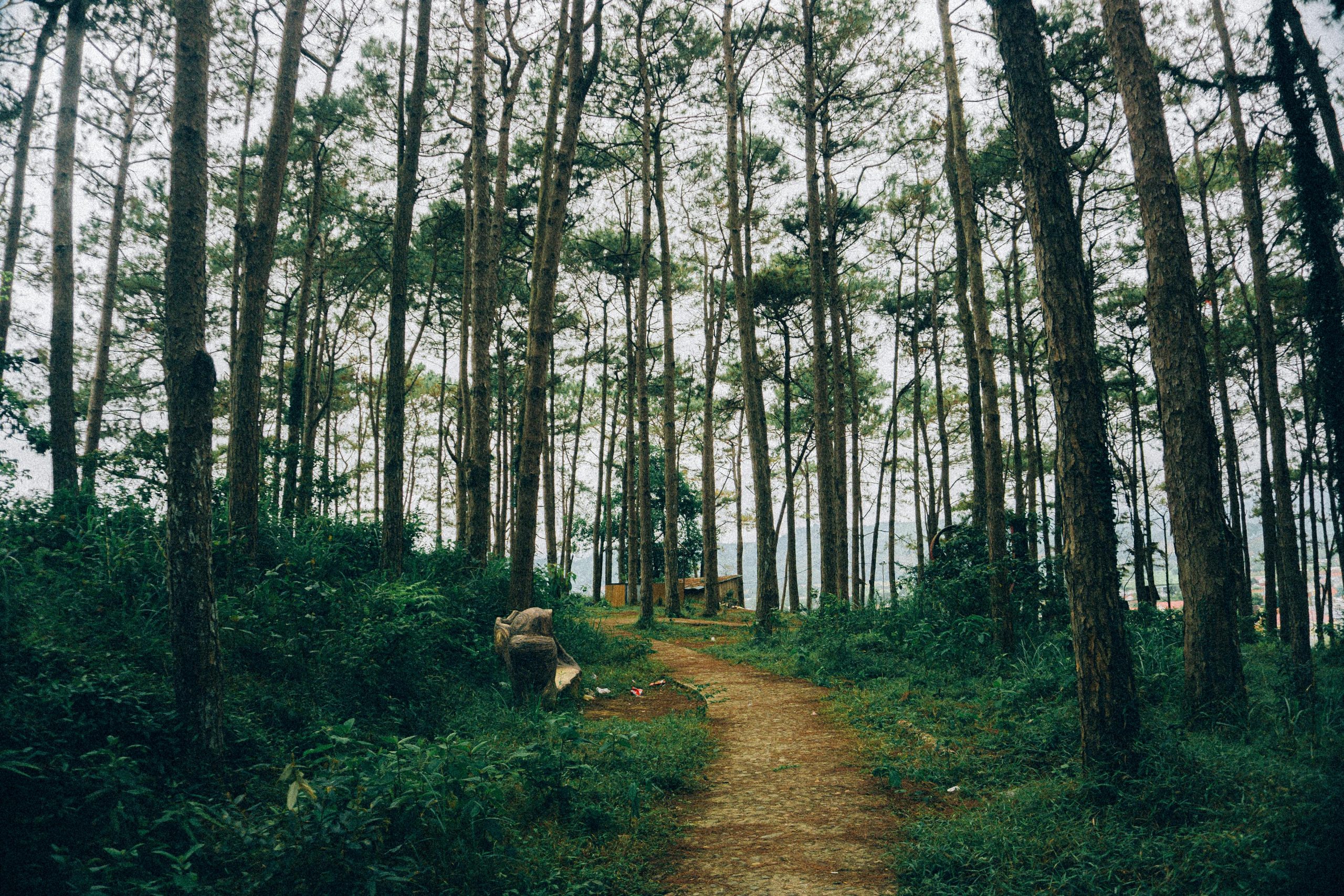
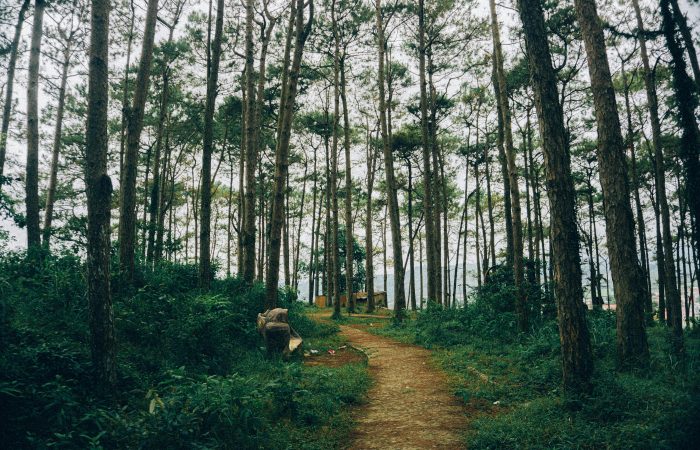
After breakfast, a short drive takes you between the eastern slopes of Yulong Xueshan and Lashi Lake to the Boduoluo old-growth forest (*Boduoluo Yuanshi Senlin*) above an Yi village. The forest is an undeveloped corner of the snow-mountain foothills — narrow paths between tall pines, mossy ground, and a deep quiet that comes from the high oxygen content of an unmanaged old-growth canopy. Your guide leads a gentle 90-minute walk on the easier loop and explains the Yi village’s story: a small ethnic-minority community whose 30-year shift toward conservation tourism is now used as a case study on community-led nature stewardship in the highlands.
Lunch is a simple village-style meal below the forest before the route continues.
The afternoon visits Shiyu Heting Naxi Cultural Park (*Shiyu Heting*) — a Naxi heritage compound built around the Dongba pictographic script, the only living pictographic writing system still in use today. Dongba priests demonstrate ritual reading from the surviving Naxi scripture cards, and your guide reads the wider context: the Naxi origin myth, the Tea Horse Road’s role in shaping Naxi society, and the layered influence of Dongba, Tibetan Bon, and Han Buddhism that gave Lijiang its distinctive cultural mix.
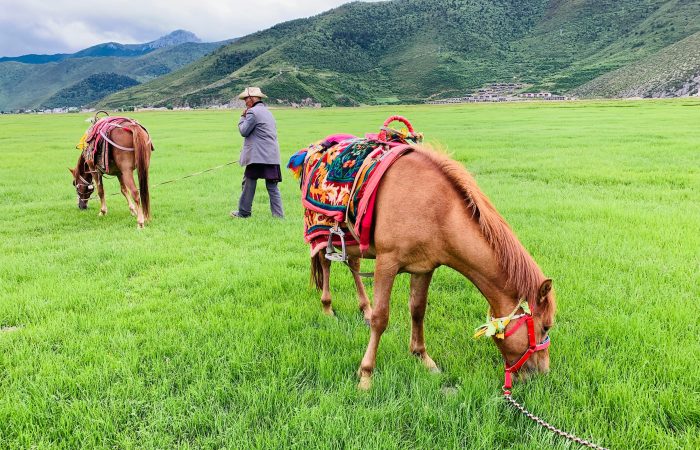
Late afternoon, the drive continues north on the G214 to Shangri-La (*Xianggelila*) — about three and a half hours, climbing from Lijiang’s 2,400 m to Shangri-La’s 3,300 m through the Three Parallel Rivers UNESCO landscape. Check in to your central Shangri-La hotel; dinner is at the hotel or a nearby Tibetan restaurant. The evening is light to help acclimatisation. Overnight in Shangri-La.
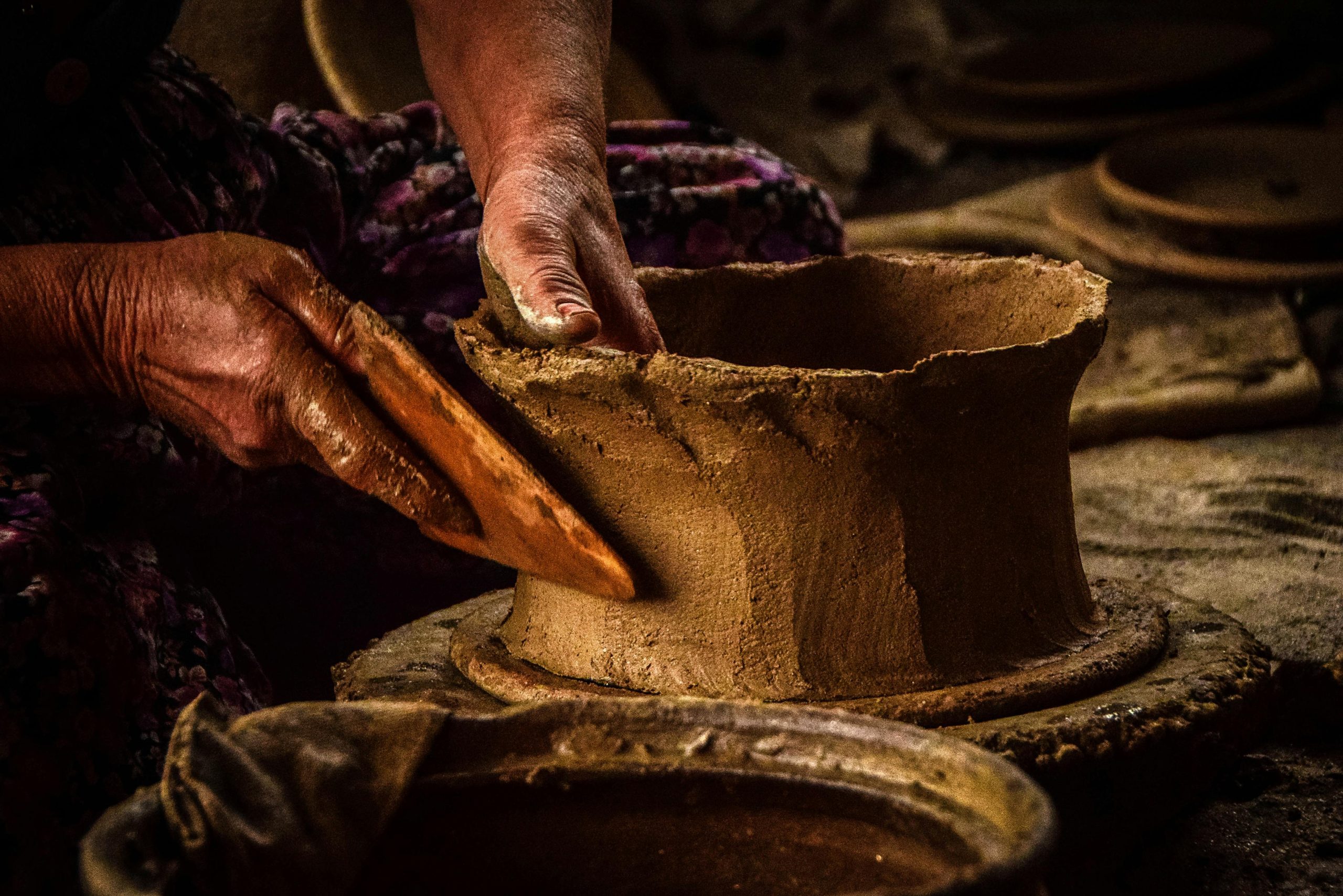
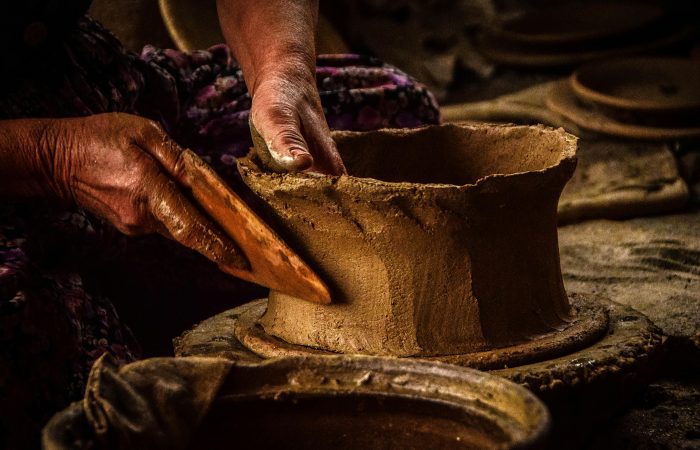
After breakfast, a 30-kilometre drive west of Shangri-La takes you to Tangdui village in Nixi township (*Nixi Tangdui*) — the birthplace of Tibetan-style black pottery (*Nixi heitao*), a 2,000-year heritage technique listed in China’s second national intangible cultural heritage batch in 2008. The village sits at 2,960 metres in a high pine valley above Shangri-La.
A resident master walks you through the twelve-step process — the white and red clay are mixed with weathered sand and ground gravel, shaped on a low wooden bench (no electric wheel, no modern kiln), then fired by burying the pieces under sawdust and pine needles, which gives the finished black its distinctive matte sheen. You sit at the bench for a hands-on Nixi black-pottery workshop — under the master’s guidance, you shape a small piece you keep at the end. As of 2022 the village has more than 100 working pottery households, all carrying the same tradition forward.
Lunch is the famous Nixi black-pottery chicken pot (*heitao tuguoji*) — local mountain chicken slow-cooked in a Nixi pottery vessel, the dish that Yunnan food critics reach for when they want to explain why the craft survived. Cooking in the unglazed black pottery is part of why the dish tastes the way it does.
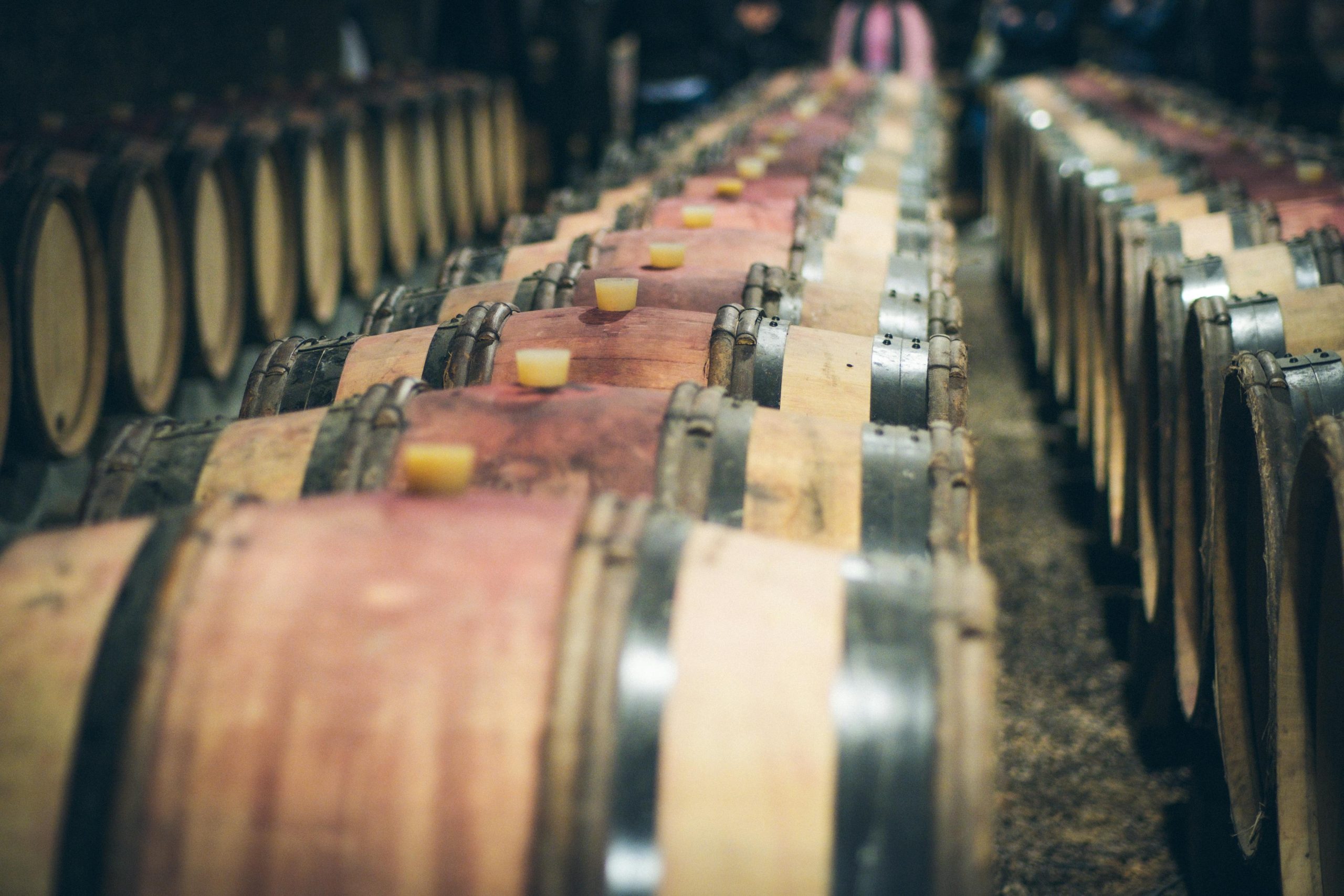
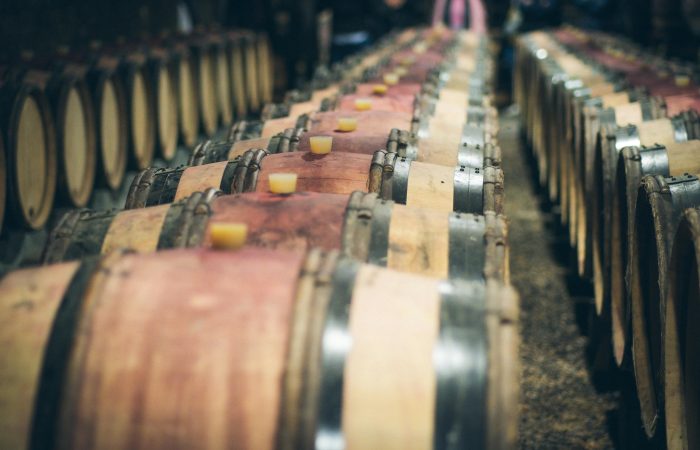
The afternoon drives southwest to Tacheng — about 90 kilometres through the eastern edge of the Three Parallel Rivers landscape, where the Jinsha drops through long forested ridges. Tacheng valley sits at around 2,000 metres and grows the high-altitude grapes that give Yunnan its growing reputation as China’s wine frontier. A guided plateau ice wine tasting walks through the small-batch ice wine made from grapes left to freeze on the vine — the freezing concentrates the sugars and gives the wine its golden colour and dense honey-fruit profile. A visit to the Yunnan Red Winery (*Yunnan Hong Jiuzhuang*) explains the region’s wider winemaking history — twenty-plus years building one of Yunnan’s largest wineries on a high-altitude terroir that is now drawing global comparisons. Dinner is at the wine-country hotel. Overnight in Tacheng.
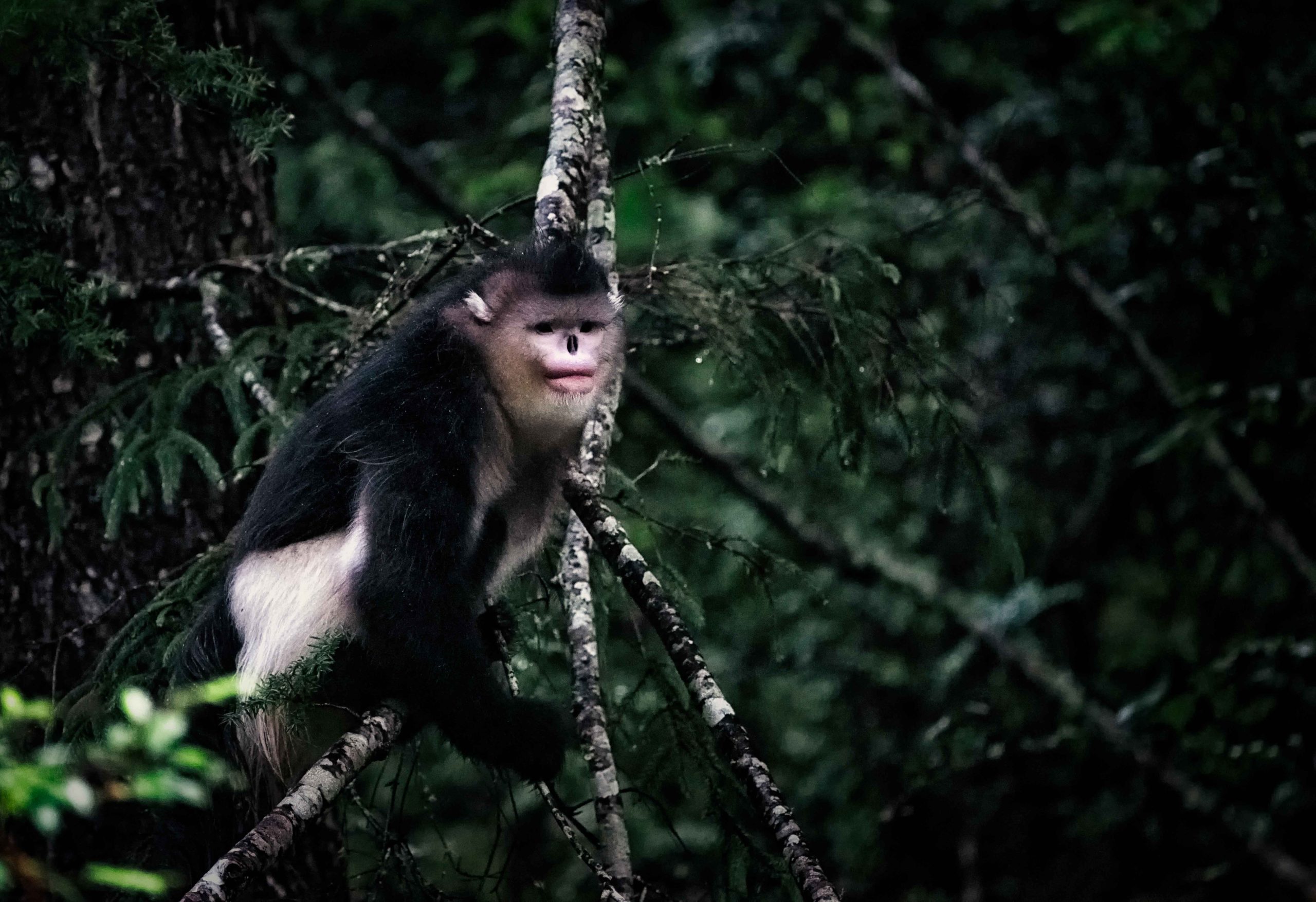
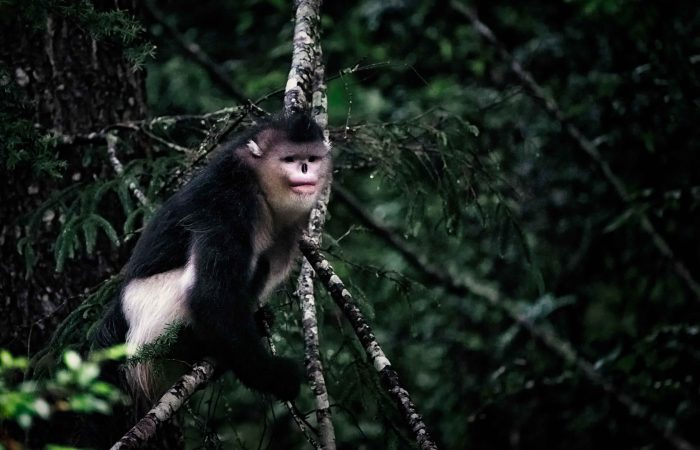
An early start — the rangers feed the troop between 9:00 and 9:30, and that is when the monkeys come down close to the boardwalk. Your guide takes you to the Yunnan Snub-Nosed Monkey National Park (*Diannan Jinsihou Guojia Gongyuan*) at Tacheng — 334 square kilometres of high-altitude forest in the heart of the Three Parallel Rivers UNESCO site, and the only place where the species can be reliably seen at close range. The Yunnan snub-nosed monkey (*Rhinopithecus bieti*) is one of the world’s rarest primates, found only in the high-altitude conifer forests between Yunnan and Tibet at 3,800–4,200 metres; thanks to the Baima Snow Mountain Reserve programme begun in 1983, the population has recovered from near-extinction to over 3,800 today. The boardwalk loop is about 3 kilometres on a flat raised path through the forest; troop sightings are typical at the morning feeding hour.
A simple forest-village lunch follows the park visit before the drive south.
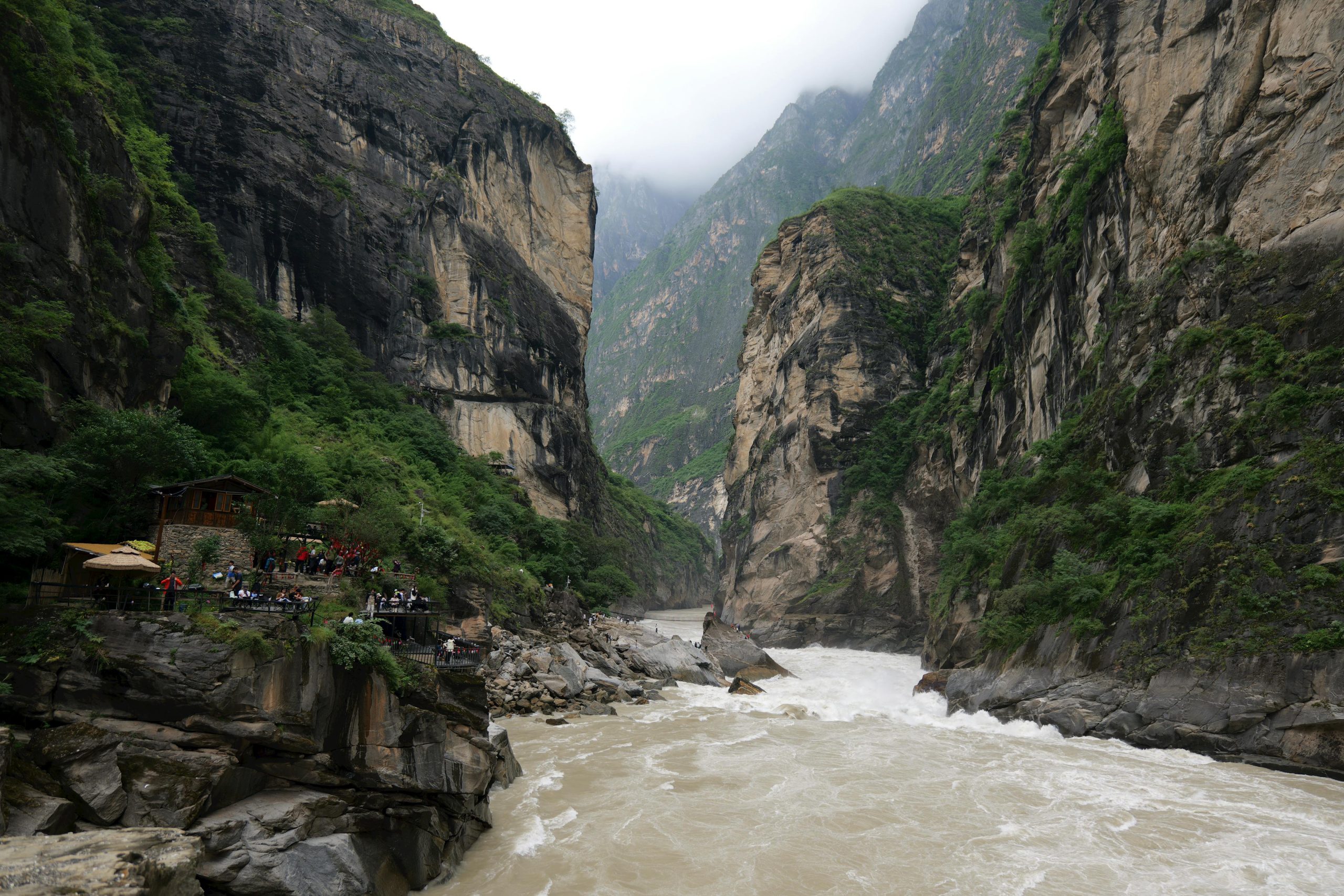
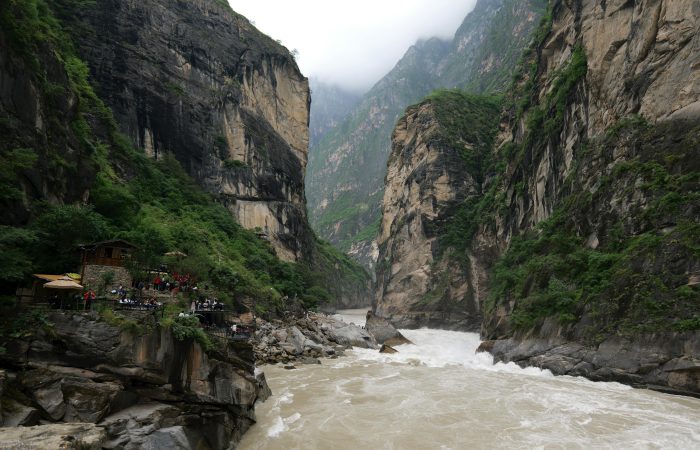
The afternoon’s route is the Tiger Leaping Gorge (*Hutiao Xia*) — the deepest river canyon in the world, where the Jinsha River compresses into a thirty-metre channel between the Yulong Xueshan ridge and the Haba Snow Mountain ridge, with a 3,790-metre vertical drop from the river to the highest peak above. Your guide takes the Shangri-La-side Upper Tiger Leaping viewing walkway, where the Tiger Leaping Stone marks the legendary point a hunted tiger crossed in a single bound. The viewing platform looks straight down into the channel; the Jinsha boils through it the colour of milky tea. The walkway uses a paved path with railings — no descent to the river itself.
Late afternoon, the drive continues south down to Lijiang — about two and a half hours along the Jinsha valley road. Dinner is at a Lijiang Old Town restaurant. Overnight back in Lijiang.
A final breakfast at the Lijiang hotel and time to pack and check out. If your flight allows a slower morning, a last walk through the Old Town quarter or a stop at a riverside café fits well — the morning quiet of Lijiang Old Town before the day-tour crowds is the best window the city has.
Your guide takes you to Lijiang Sanyi International Airport for your onward flight, timed to your departure. From here, everything is in your hands.