Five days built around Chongqing’s stilthouse-lane heritage and the UNESCO karst country two hours south.
Mountain City Trail walks, an aerial ride across the Yangtze on the city’s last commuter cableway, a Two-Rivers night cruise past Hongya Cave, sugar-painting and Shu-embroidery demos in the restored Shibati district, a hands-on hotpot base workshop before dinner, and a full day inside Wulong Karst to walk the Three Natural Bridges and the Longshui Gorge fissure. The pace is built around restorative walking and cultural texture rather than landmark-checking.
Your driver meets you at Chongqing Jiangbei International Airport or the city’s main railway station — a private business vehicle takes you to your downtown hotel for check-in and time to recover from the journey.
Later in the afternoon, your guide runs a short welcome session over tea: the shape of the five days ahead, what to expect from Chongqing’s vertical geography, and a primer on the food and pace of the trip.
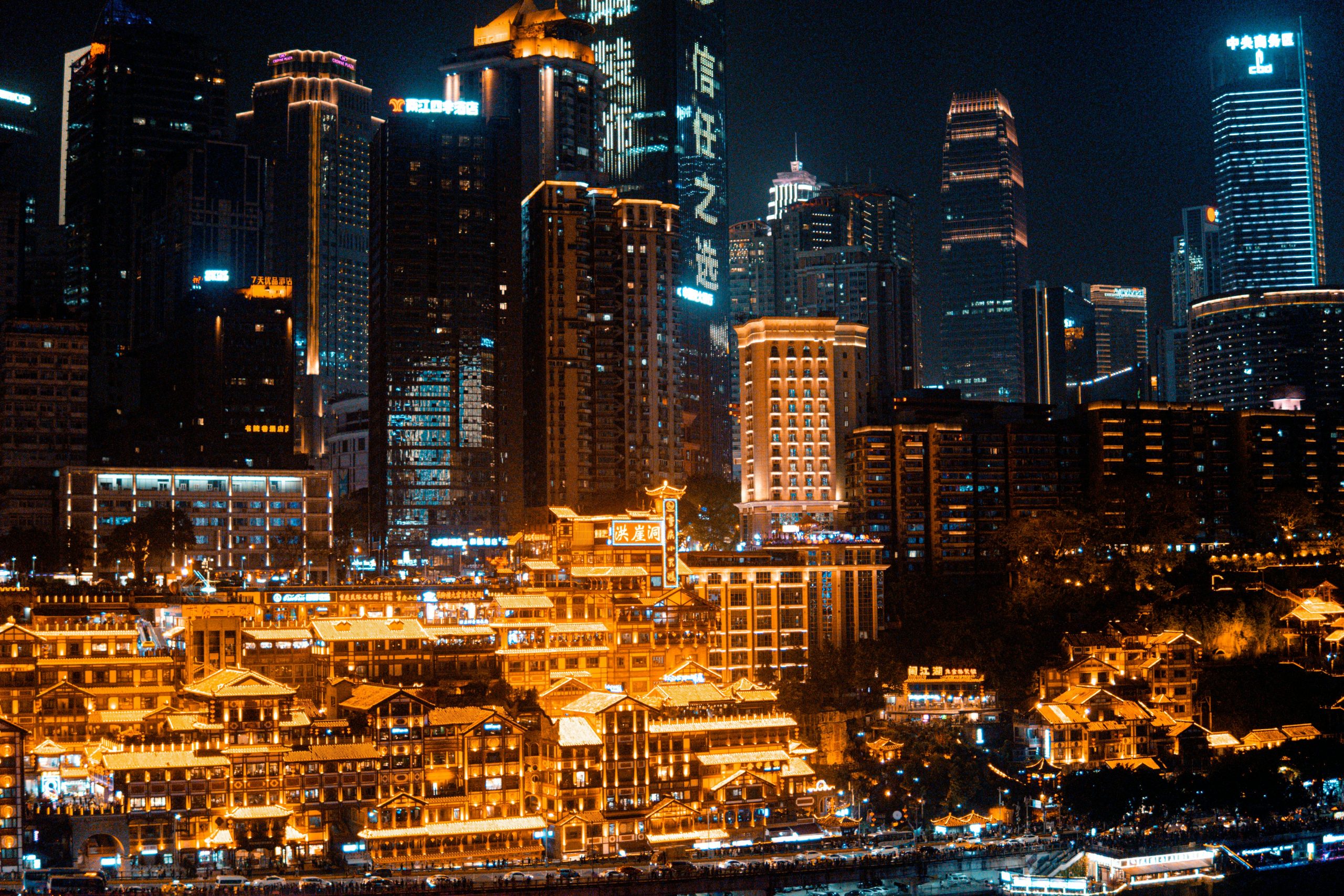
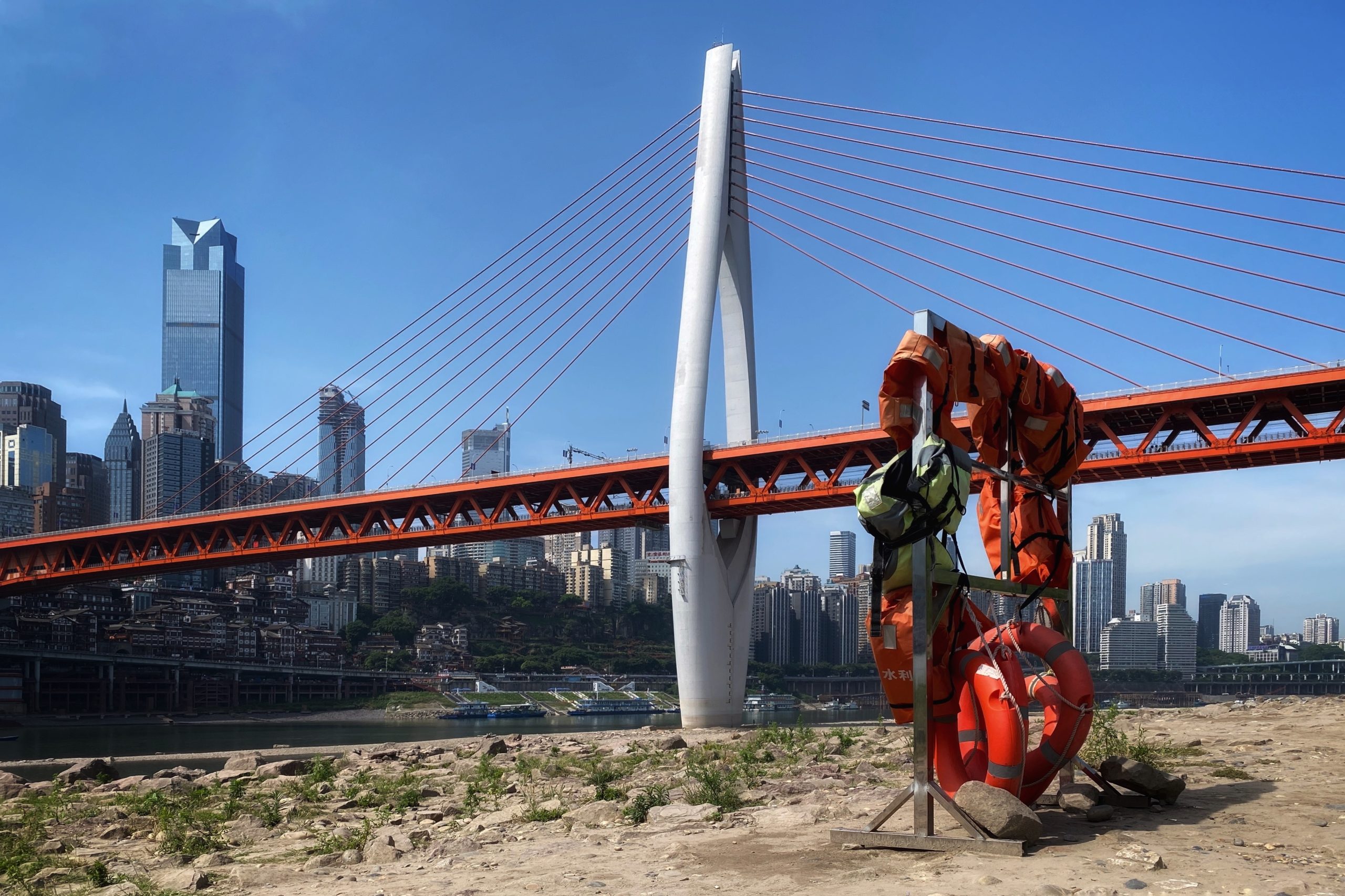
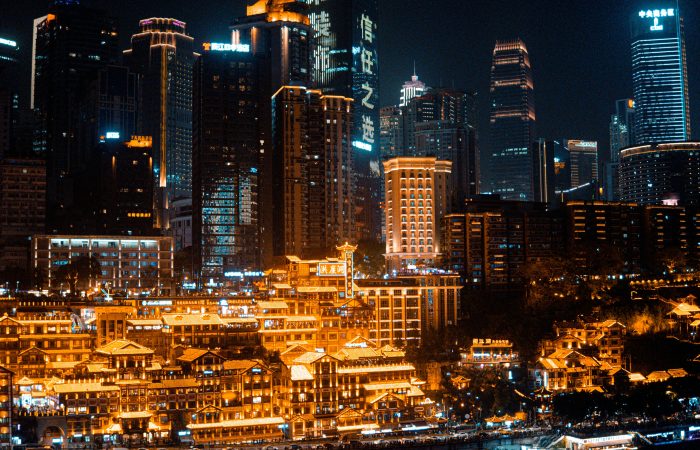
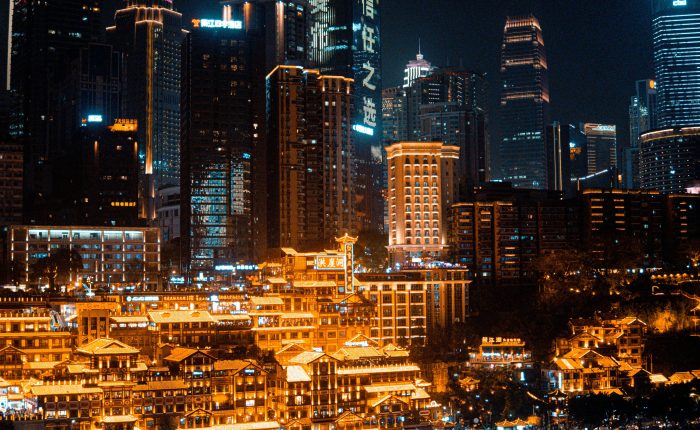
As the city lights come on, the day closes with a Two-Rivers Night Cruise — a 60-minute boat ride where the Yangtze and Jialing rivers meet at Chaotianmen. Hongya Cave lights up on the Jialing bank, the Qiansimen Bridge glows above, and the stacked skyline behind them is the clearest introduction to how this mountain city actually sits on the water. Dinner is at your own arrangement after the cruise — your guide points you to a few options close to the hotel.
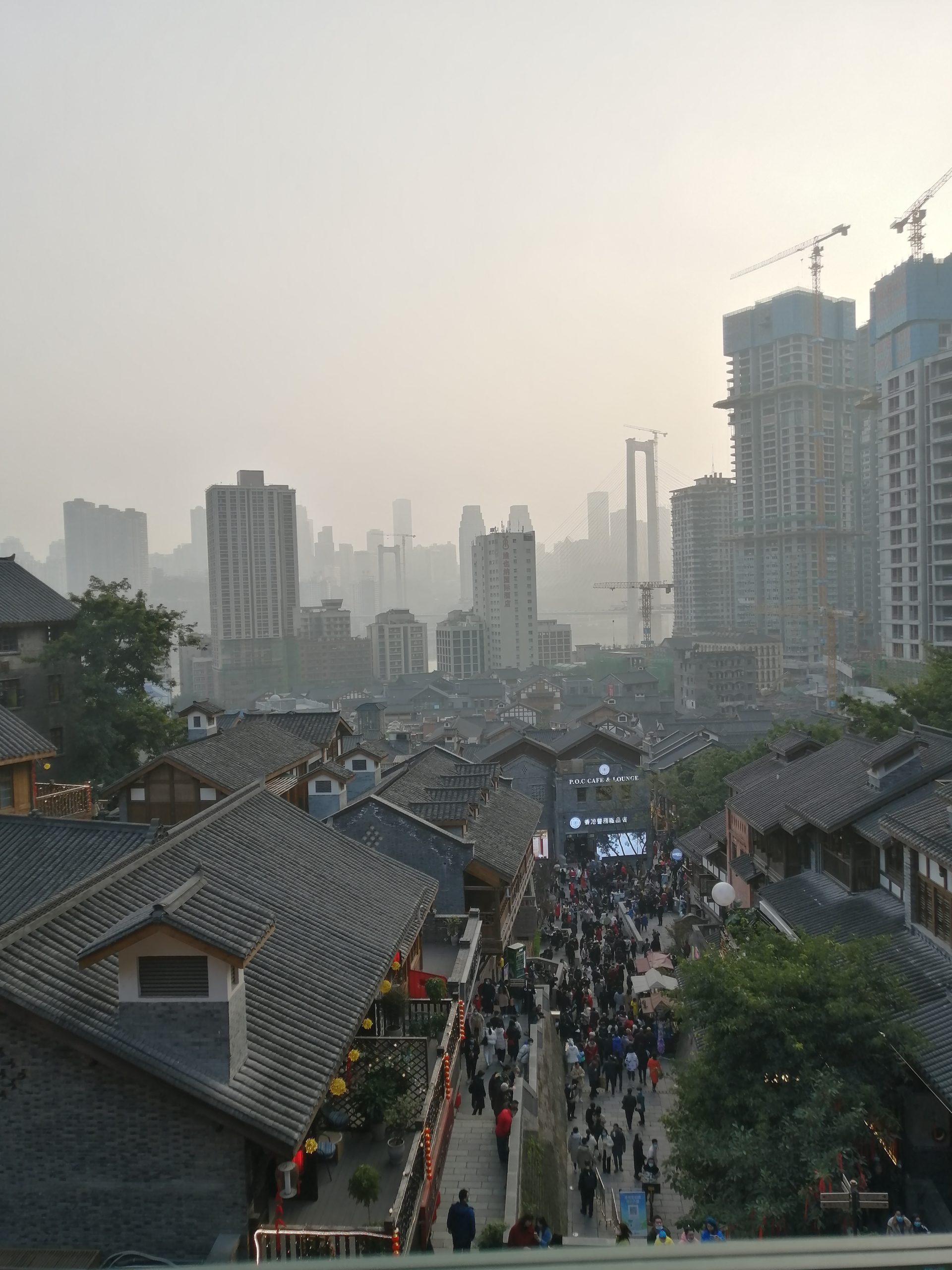
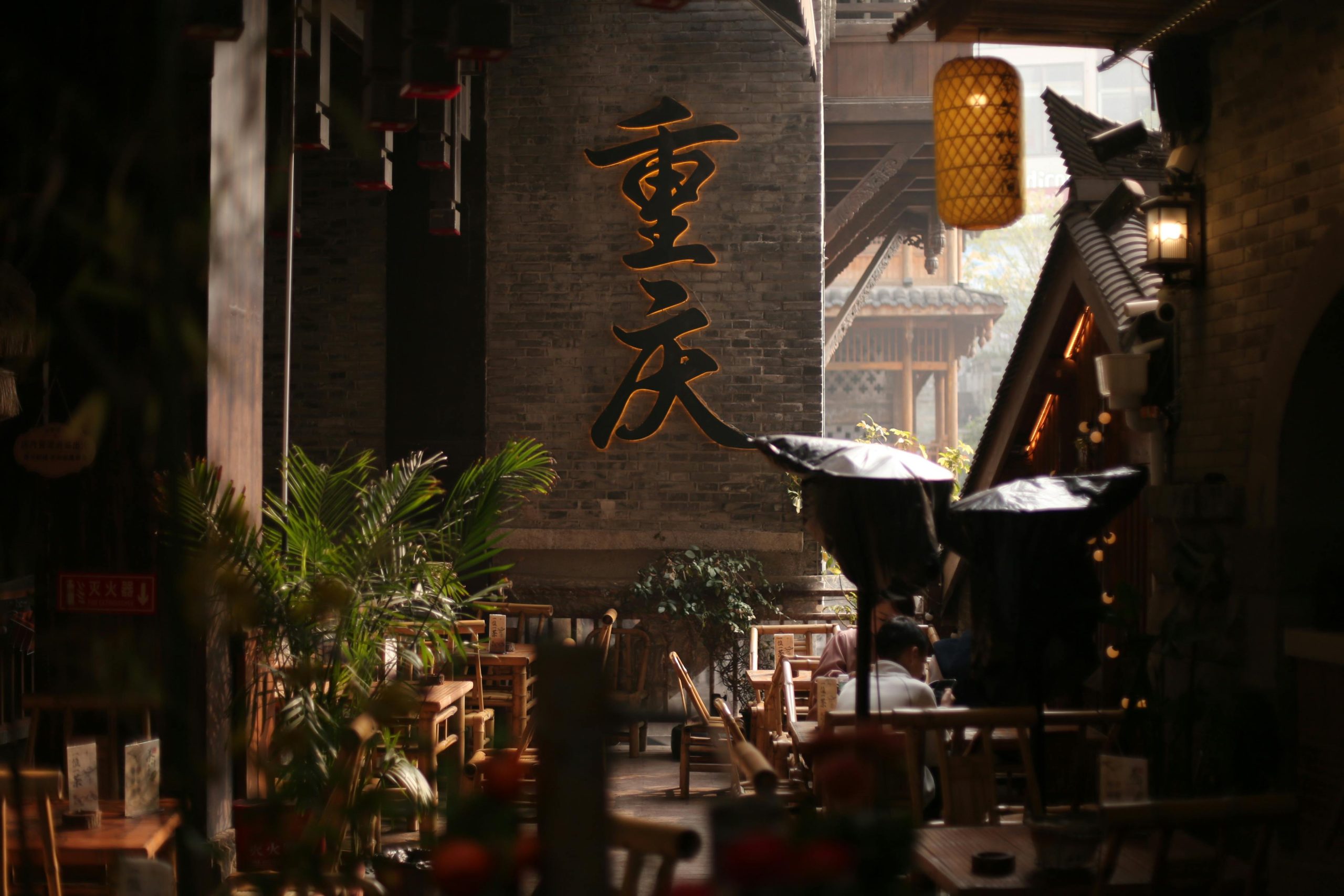
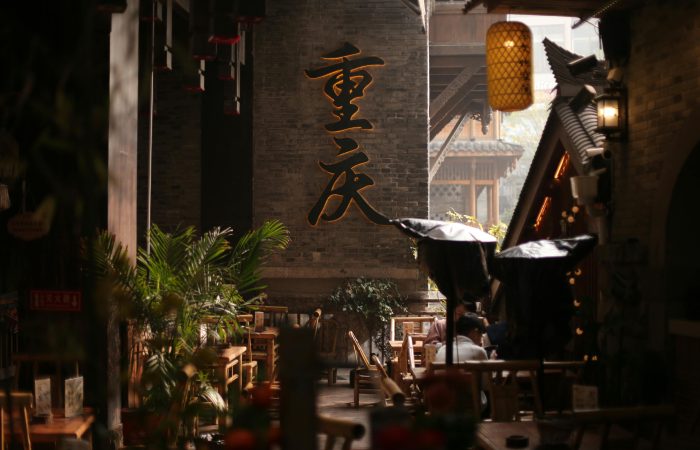
After breakfast, the day opens on the Shancheng Trail (*Shancheng Budao*) — Chongqing’s Mountain City Trail, a stone-stair walking path that threads through cliffside neighbourhoods above the Yangtze. The route passes old stilthouse homes, doorstep tea tables, and the layered upper-and-lower city architecture that makes Chongqing physically unlike anywhere else in China. Your guide reads the geography as you go: why the houses are built on stilts, how the stairs replaced streets, and what the old mountain-city life looked like before the high-rises.
Nearby, a short visit to the Air-Raid Shelter Museum steps into one of the repurposed wartime tunnels that honeycomb the hillsides — a layer of Chongqing’s history most travelers never see.
Lunch is a Shancheng private-kitchen lunch — a home-style meal of Chongqing dishes cooked in one of the restored courtyard kitchens along the trail. Small room, family recipes, and the kind of local food that does not appear on any tourist menu.
The afternoon moves to Eling Second Factory (*Eling Erchang*) — a decommissioned wartime printing plant reborn as Chongqing’s premier creative park. The old industrial buildings now house studios, design shops, and rooftop terraces with panoramic views over the Yangtze.
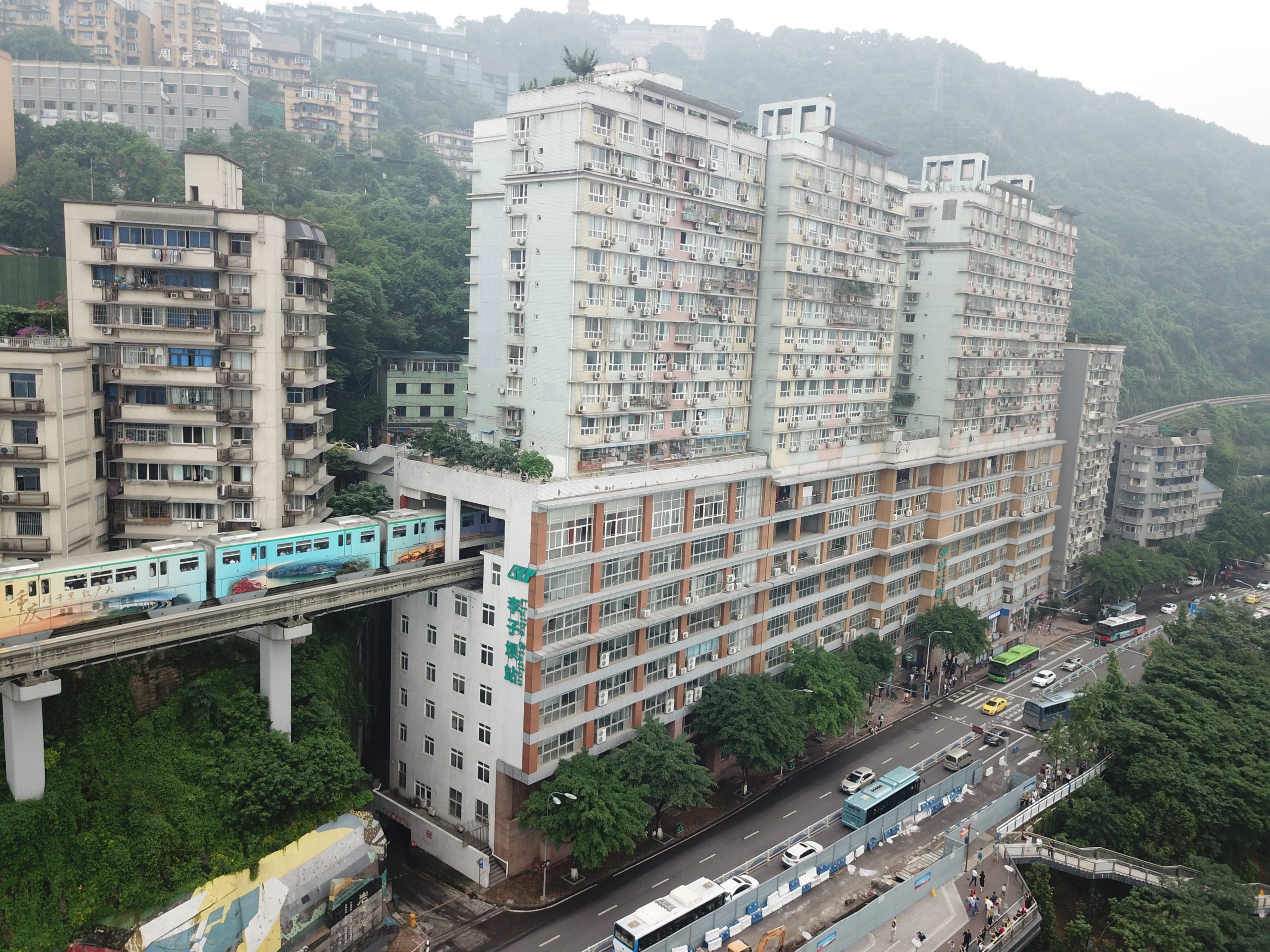
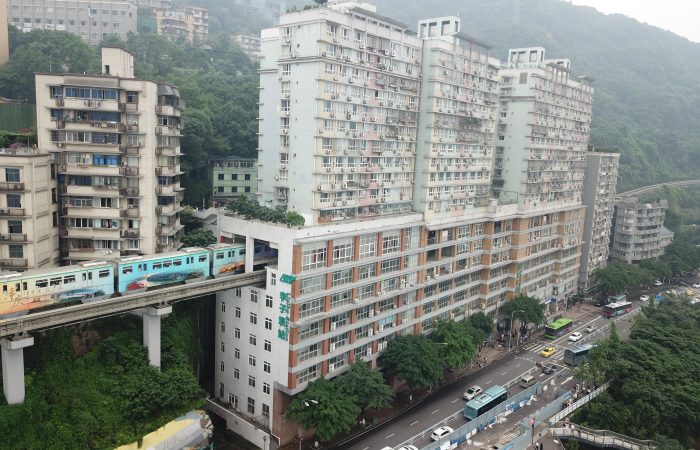
From Eling, a short walk leads to Liziba Station (*Liziba*) — the famous spot where Chongqing’s Line 2 monorail cuts directly through the sixth floor of an inhabited apartment block. After watching the spectacle from the platform, the route continues to Kuixing Tower (*Kuixing Lou*), a stacked cliffside pavilion where the view opens over the river bend.
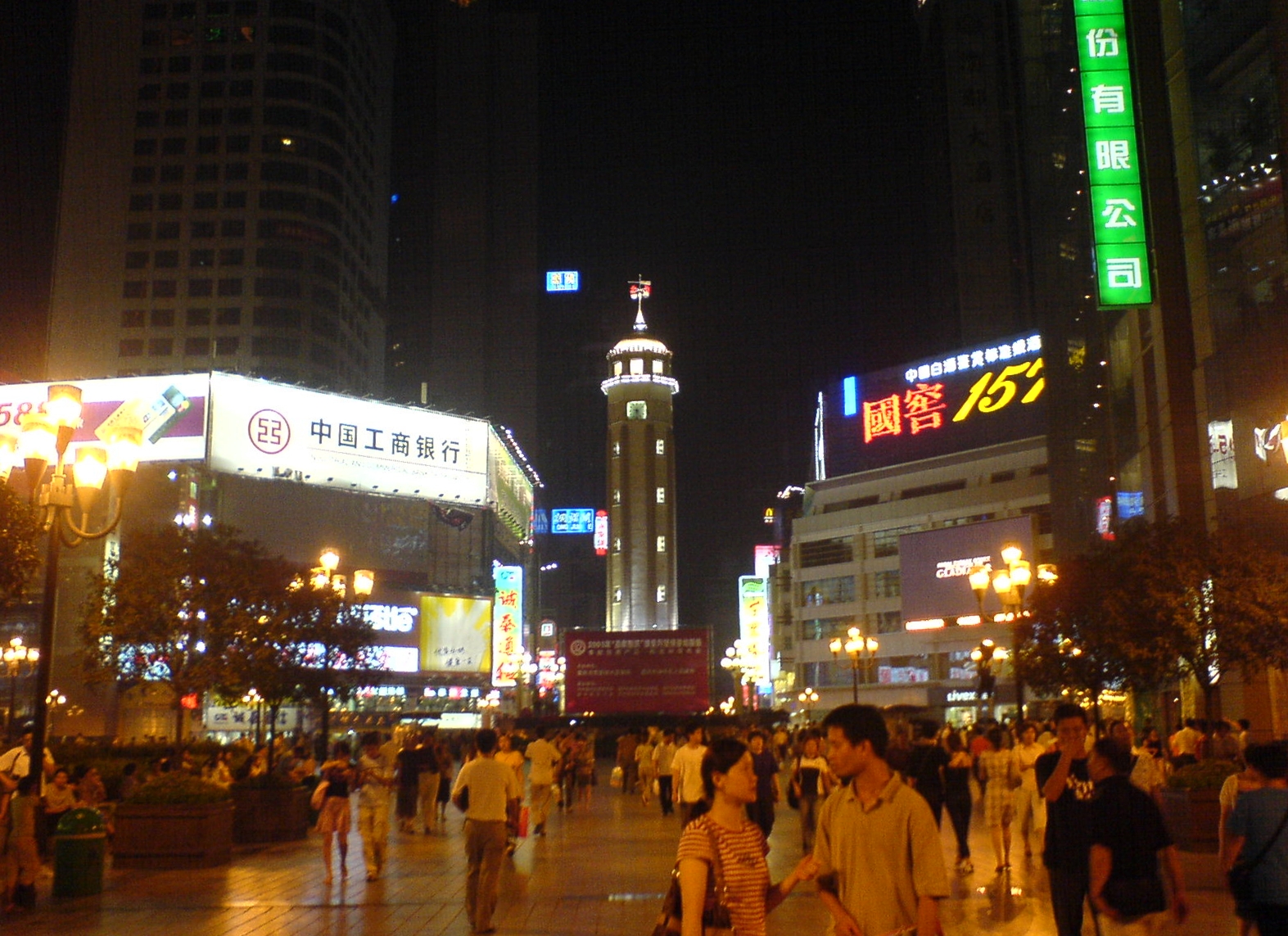
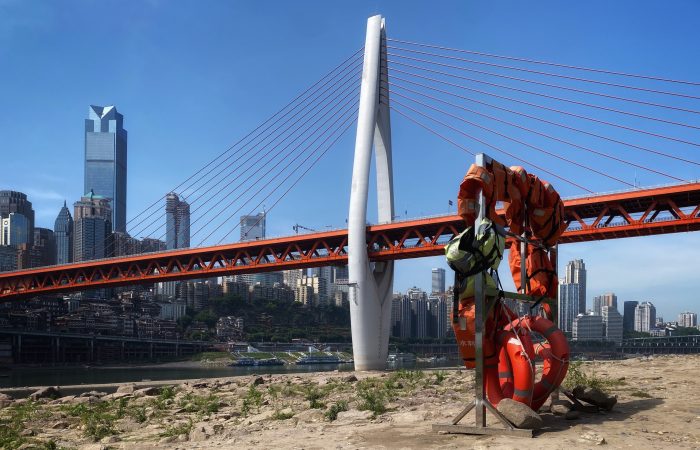
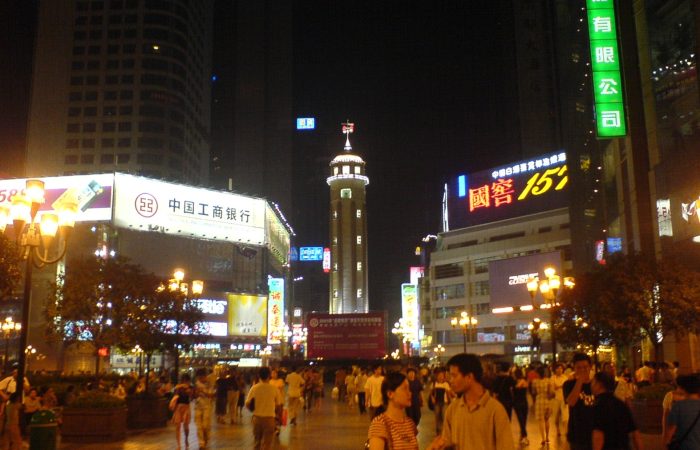
As evening falls, you walk across the Qiansimen Bridge for the lit-up view of Hongya Cave from above, then drop down into Jiefangbei Square (*Jiefangbei*) — the city’s historic heart, a 1940s liberation column now ringed by glass towers. Dinner is at your own arrangement in the Jiefangbei district.
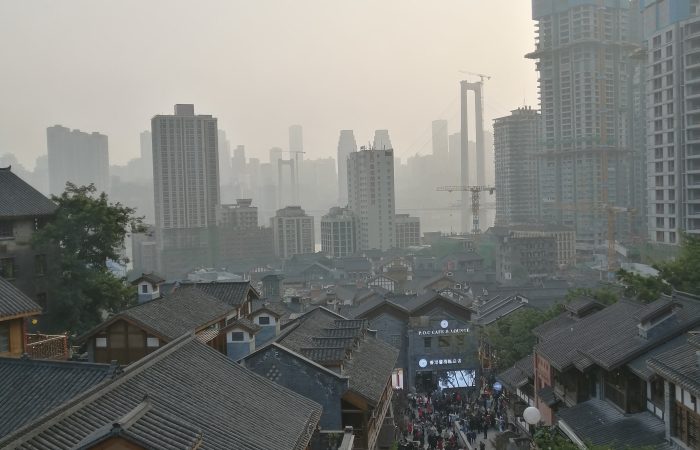
The morning opens at Shibati Traditional Quarter (*Shibati*) — Chongqing’s restored 18 Steps district, a stilthouse neighbourhood between the upper and lower city that now houses a concentrated set of intangible-heritage workshops. Your guide walks you through four traditions in sequence: Yangtze boatmen chants (*chuanjiang haozi*) performed by an old Jialing river-worker, Chongqing storytelling (*Chongqing pingshu*) in the old sing-speak style, a hands-on sugar-painting demo (*tangchua*) where molten sugar is poured onto a cold slab into animal shapes, and a Shu-embroidery session (*Shuxiu*) with one of Sichuan’s four famous embroidery traditions — fine silk, double-sided stitching.
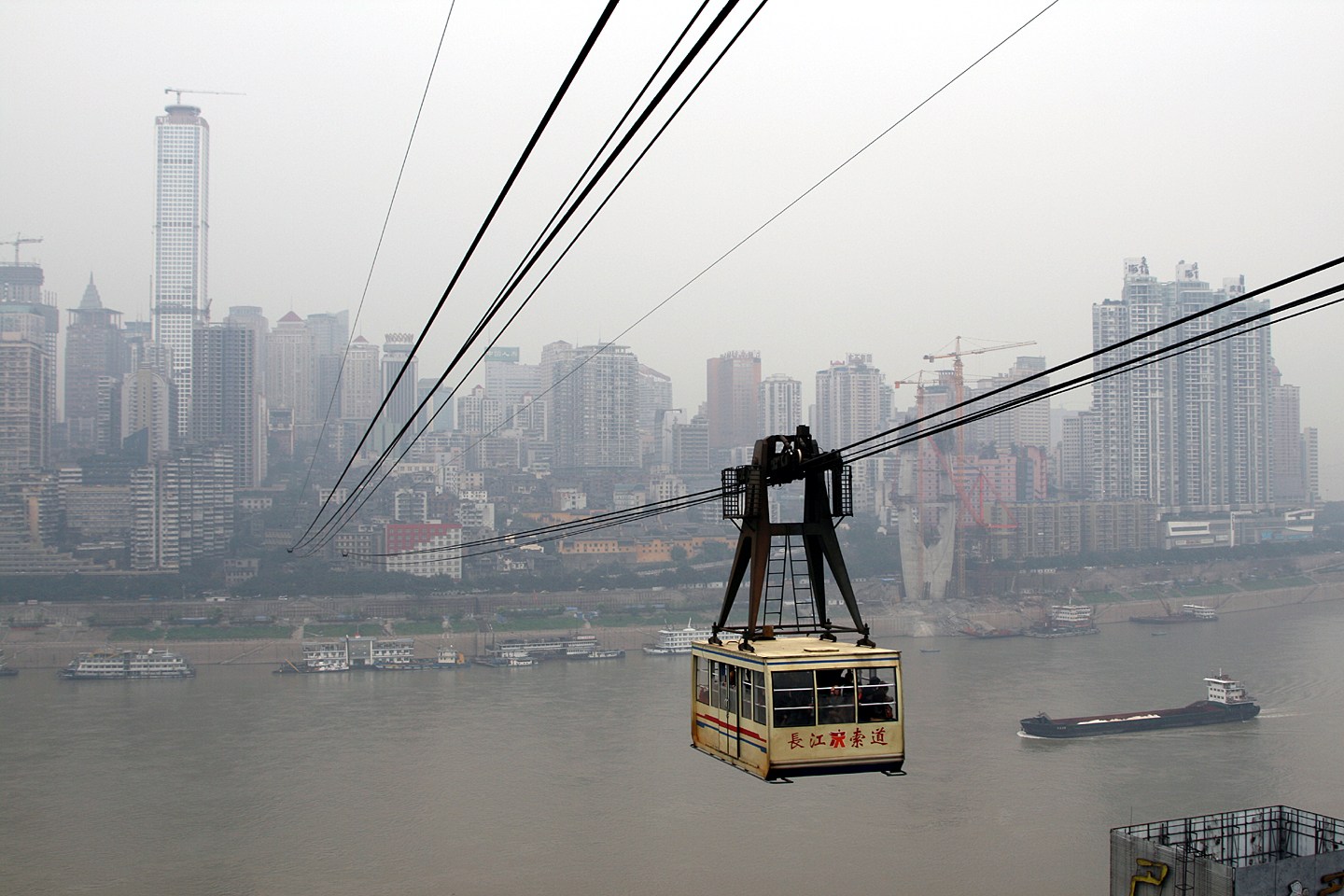
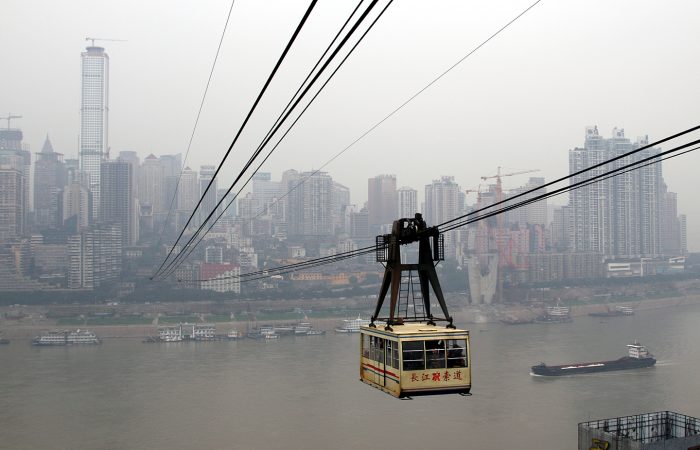
Around midday, the route climbs up to the Yangtze Cableway (*Changjiang Suodao*) — Chongqing’s 1,166-metre cross-river cable car, the city’s last working aerial commuter line and its best skyline view. The ride takes about four minutes, with the full vertical city stacked behind you as the car crosses above the river. Lunch is at your own arrangement on the south bank, where your guide points you to one of the riverfront local eateries.
The afternoon shifts to Longmenhao Old Street (*Longmenhao*) — a Republican-era riverside quarter with restored consulate buildings and quiet teahouses. A Chongqing tea ceremony inside one of the teahouses walks through the local brewing rituals, and a short bamboo-weaving demo closes the session.
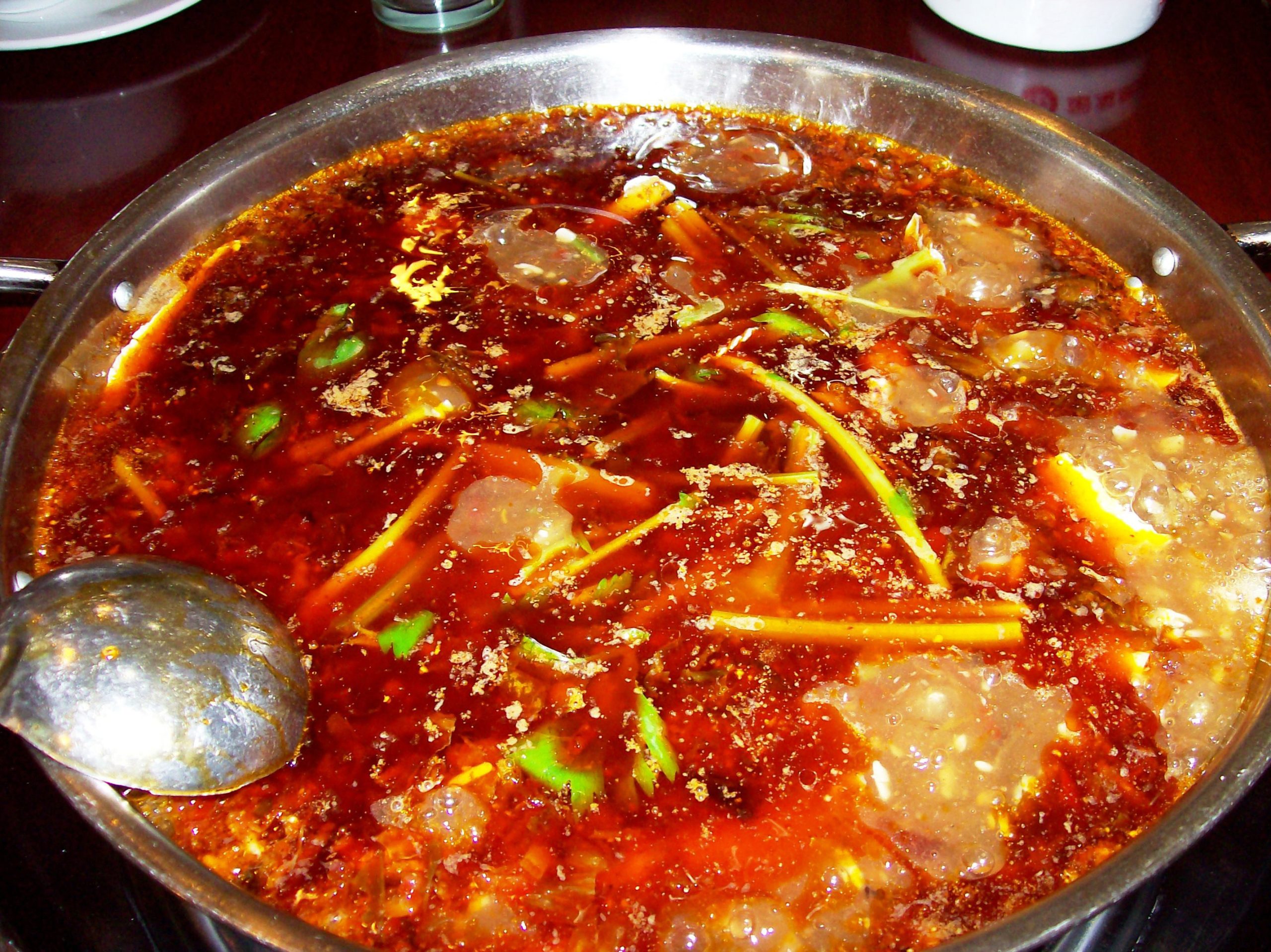
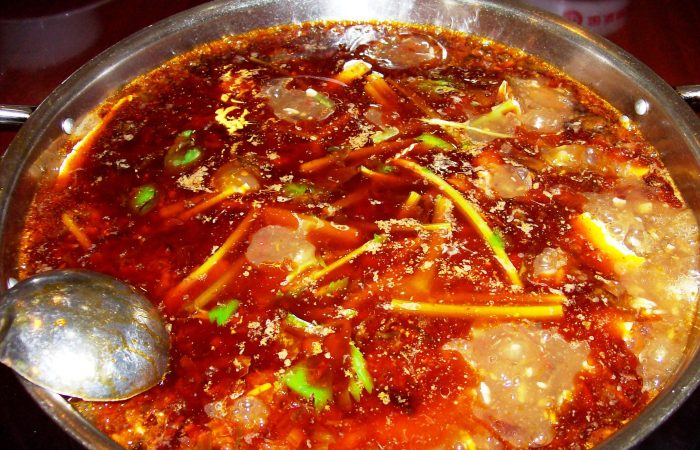
As evening falls, the group moves to a local hotpot kitchen for the hotpot-base workshop — a hands-on session blending the beef-tallow broth with Sichuan peppercorns, dried chillies, and aromatics under the chef’s guidance. The base you make is then used for your own Chongqing Hotpot dinner at the same venue — tableside cooking with meats, vegetables, and noodles dropped into the bubbling broth. Chongqing’s signature meal, made from scratch.
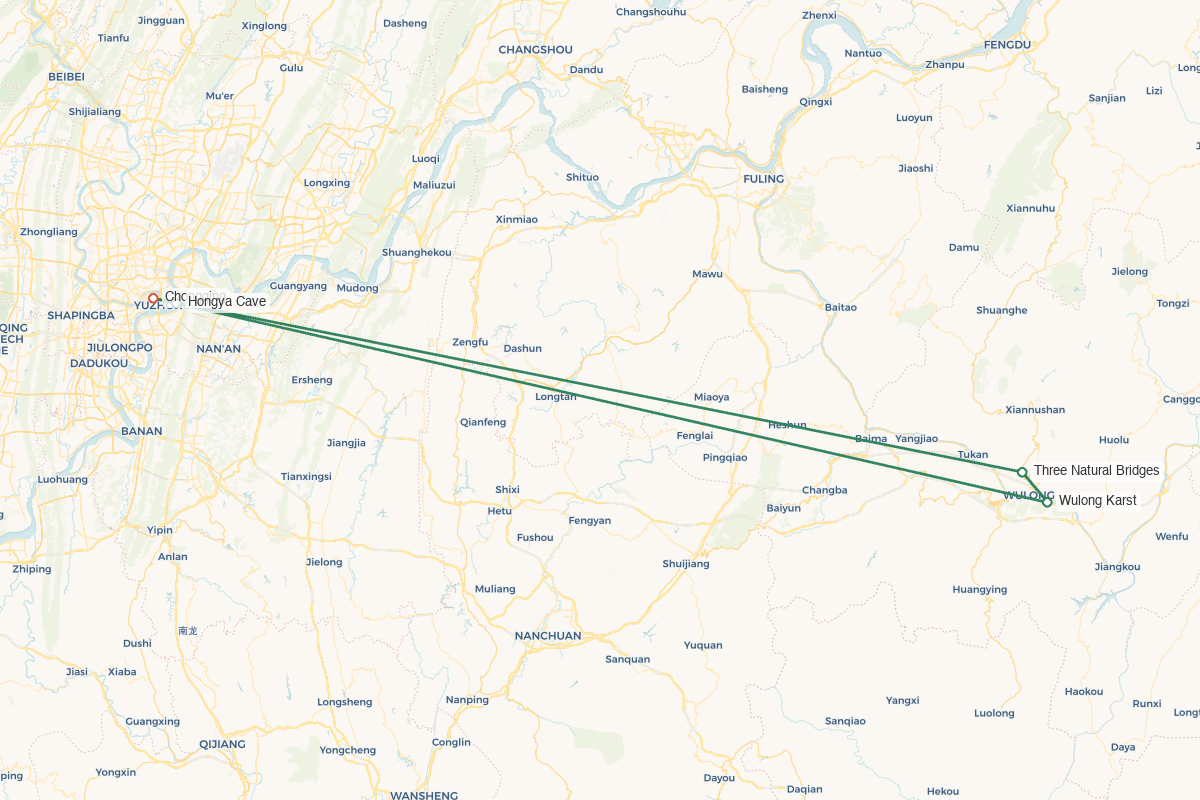
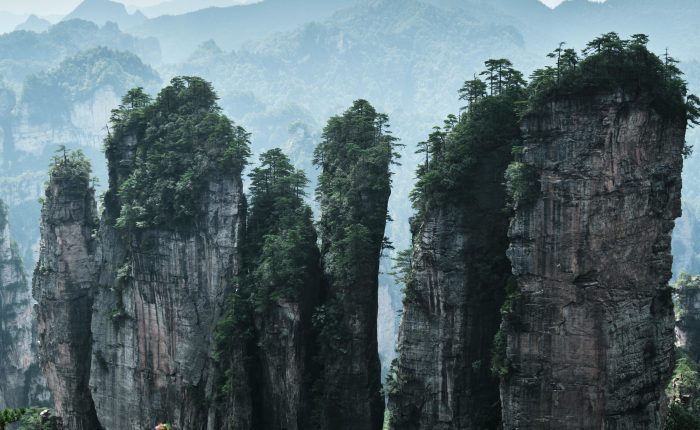
After breakfast and checkout, your driver takes you south to Wulong Karst (*Wulong Kasite*) — the UNESCO World Heritage limestone landscape about 2.5 hours from central Chongqing. The drive climbs out of the river valley and into layered karst country, with the air steadily cooling as the city falls behind.
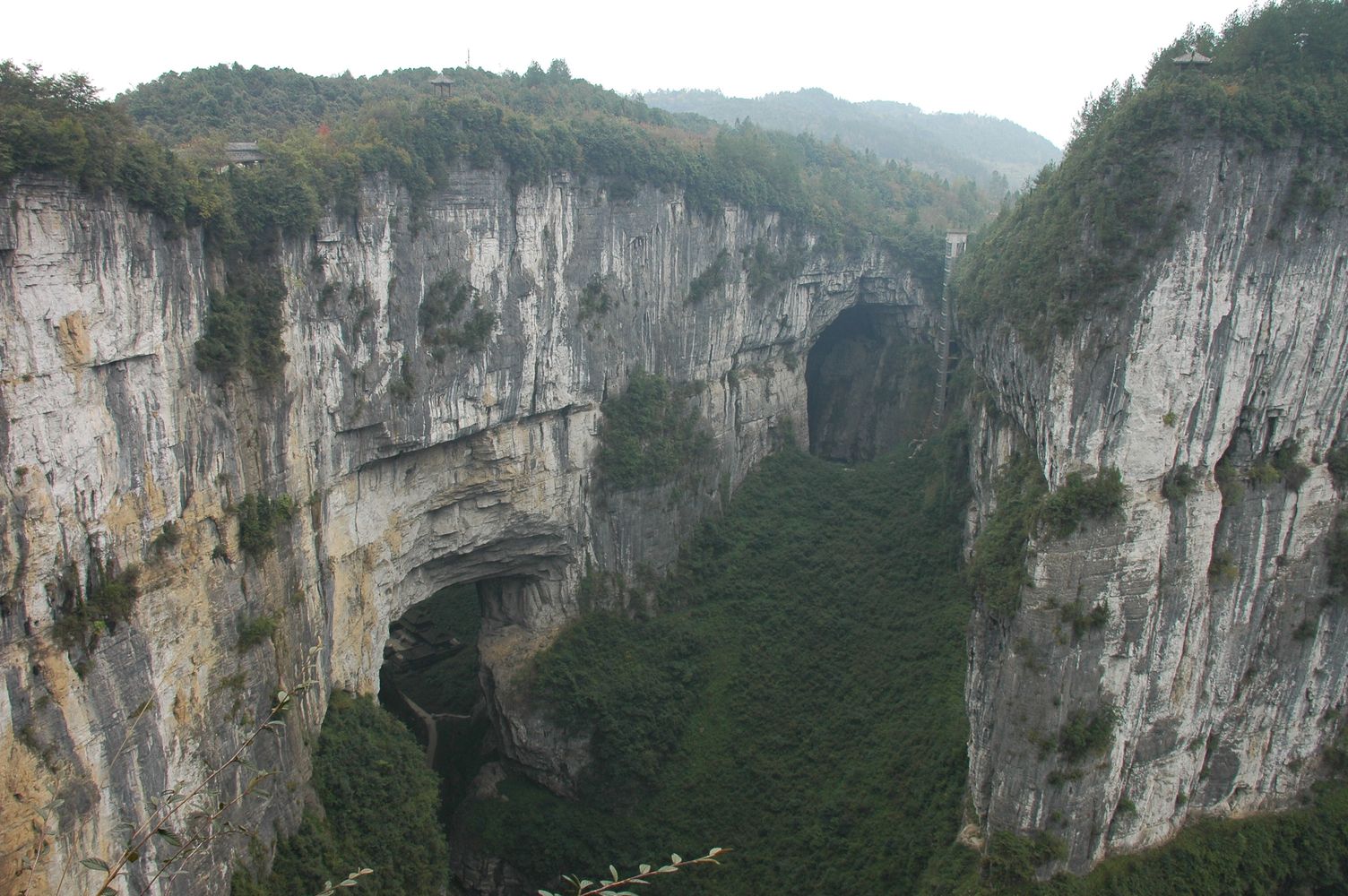
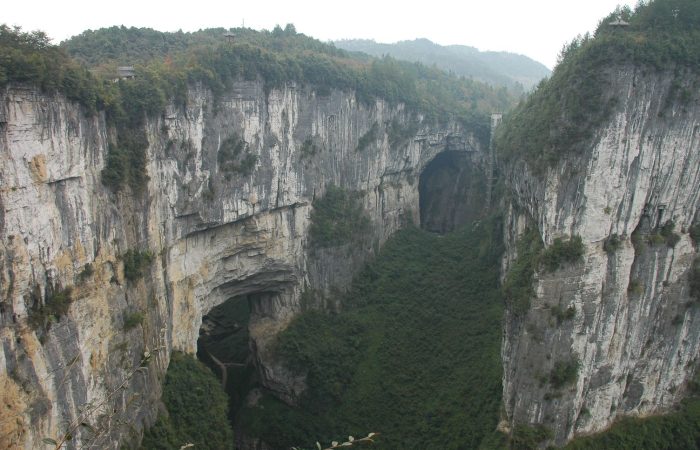
The morning opens at the Three Natural Bridges (*Tiansheng Sanqiao*) — three enormous natural limestone arches carved by an underground river, each spanning a deep sinkhole canyon. An elevator drops you into the canyon floor, then a boardwalk leads through the arches with the cliff walls closing overhead. This is the Wulong Karst’s signature formation and one of the most dramatic short walks in China’s world-heritage inventory.
Lunch is at your own arrangement near the park entrance — your guide points you to the farmhouse restaurants where mountain vegetables, smoked pork, and corn-and-potato country dishes replace the fiery flavours of the city.
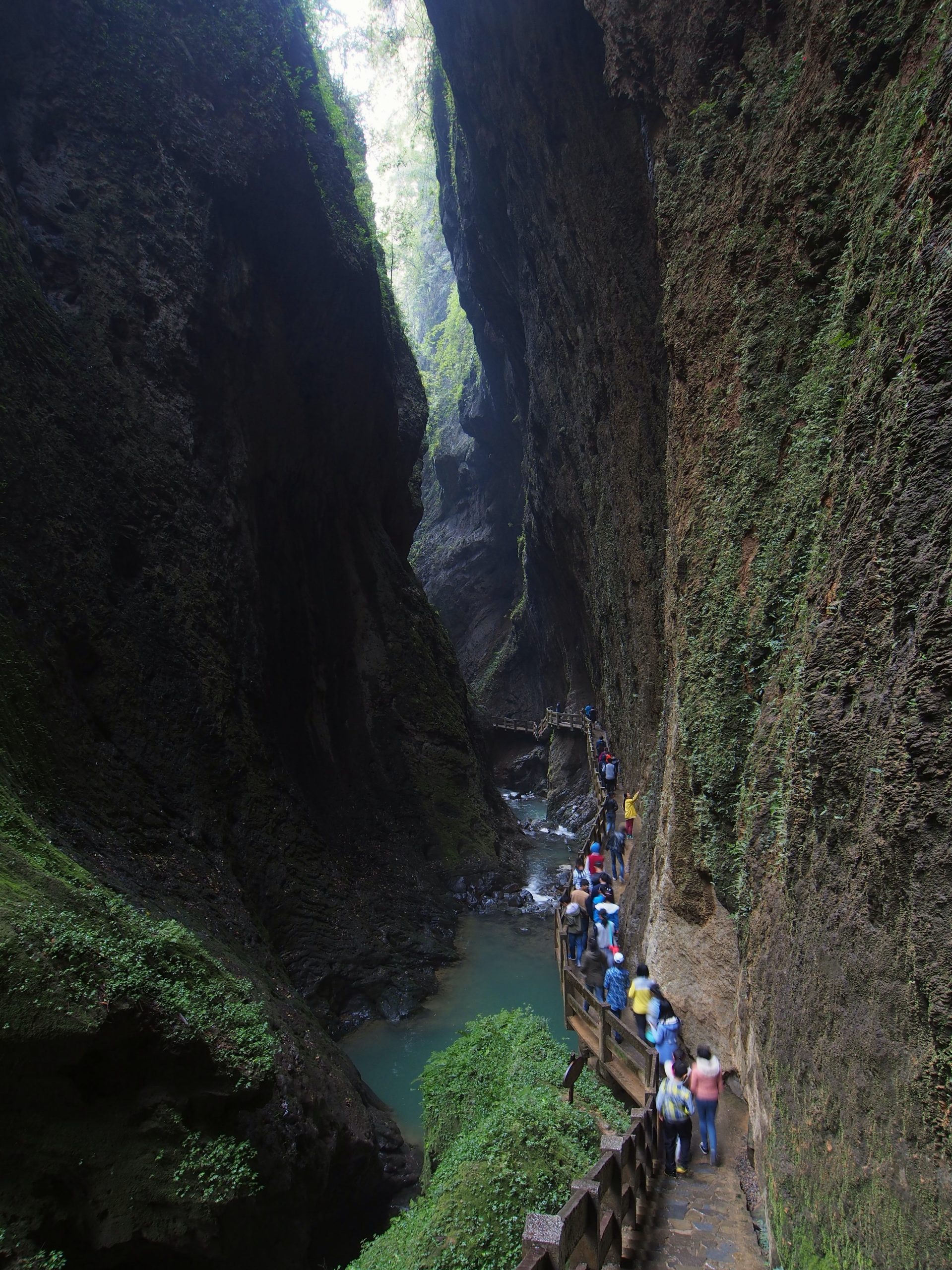
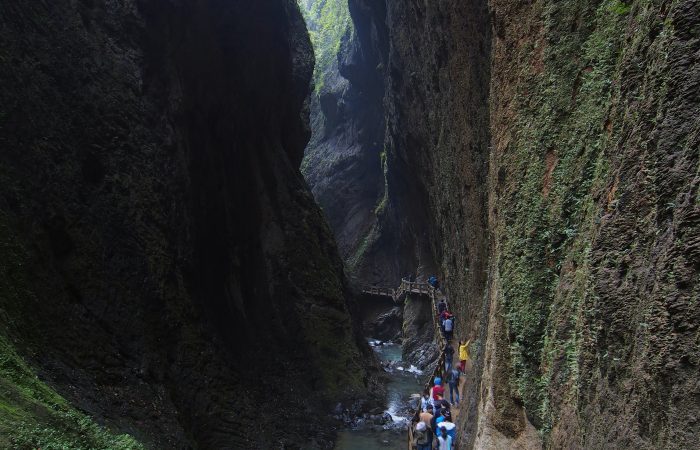
The afternoon continues at Longshui Gorge (*Longshuixia Difeng*) — a narrow slot canyon inside the same park, where boardwalks follow a stream between cliff walls that sometimes close to only a few metres apart. The route is gradual and well-built, with seated rest points along the way, and the air inside the gorge is noticeably cooler.
In the evening, the group checks into the Wulong scenic-area hotel. Dinner is at your own arrangement at the hotel or in the nearby village, followed by an early night.
A final breakfast at the hotel, then a gentle morning at your own pace in Wulong — a stroll through the hotel grounds or the nearby village, clean mountain air, and a slower goodbye to the karst country.
Around midday, the drive back to Chongqing — about 2.5 hours on the expressway, with the city’s vertical skyline reappearing as you descend into the river valley.
In the afternoon, your driver takes you to Chongqing Jiangbei International Airport or the main railway station for your onward journey. Your guide is available by phone for any last-minute help with transport or directions.